Tuesday, 17 January 2023

30 Excellent Product Landing Pages Guaranteed to Inspire You

As an e-commerce business owner, you promote your products or services in ads, social media posts, or emails. Often, you’ll focus on driving traffic to your website, where the majority of your new customers are acquired. However, if you’re driving all that traffic to poorly designed product landing pages, you may be missing out on some serious sales.

Fortunately an effective, conversion-optimized product landing page is within reach! You’ll turn more visitors into customers by including things like a catchy headline, high-quality images, and call-to-action buttons.

In this post, we’ll explain what a product landing page is and how to create one. Then, we’ll showcase 30 excellent product landing pages guaranteed to inspire you and help you on your journey to becoming master of your ecommerce conversion rate.

Let’s get started!

What Is a Product Landing Page?

Put simply, a product landing page is a valuable tool designed to promote and sell a particular product or service. Once visitors click on a link to this web page, it will leave a first impression of the item and encourage them to purchase it.

DreamHost Glossary

Landing Page

A landing page is a singular web page that typically serves a unique marketing objective. For instance, this page may be designed to support e-commerce transactions, capture email leads, or communicate a ‘coming soon’ message.

View Term

You may be wondering how product landing pages differ from product pages. Although both can promote products, landing pages are optimized for conversions. They usually remove menus, unrelated content, or links to other pages on your website.

You can include links to your product landing pages in paid ads, email newsletters, or social media posts. When users visit the page, they’ll see a conversion funnel for whichever product you’re trying to sell.

Here are just a few items you could promote on a product landing page:

  • Physical products from your online store
  • Digital products such as e-books or online courses
  • Subscriptions for your membership site

Ultimately, the goal of a product landing page is to increase conversions. There are many different ways to do this, but let’s discuss some best practices when creating your product landing page.

How to Create the Perfect Product Landing Page 

When designing your product landing page, it’s important to focus solely on selling your product. While lead generation landing pages might aim to gain new sign-ups, product landing pages should highlight a specific item’s main features and selling points.

To help you get started, here are our tips for creating a well-designed product landing page:

  • Keep it simple: A landing page should focus on a single goal, such as making a sale or capturing a lead. Avoid distracting the visitor with unnecessary links or information.
  • Use high-quality images: Whether you’re promoting a physical product or digital item, any photos should be attractive so that visitors want to make a purchase.
  • Use Video: The video should be well produced and effectively communicate the value proposition and call to action. Studies show that including a video on a landing page can lead to a 2-3x on conversions compared to a landing page without video.
  • Add a catchy headline: Since headlines are the first thing visitors will see on your product landing page, make sure to grab their attention immediately.
  • Have a compelling value proposition: Explain to your visitors why your product or service is clearly the best solution to their problem or need.
  • Feature social proof: Often, shoppers want to see positive reviews and customer testimonials before buying your products.
  • Include a Call to Action (CTA): To encourage visitors to become customers, you can include CTA buttons in multiple places on the product landing page.
  • Whitespace: Use whitespace to create hierarchy, improve legibility and separation. Orderly and consistent alignment can create a sense of balance and organization.
  • Typography: Take into consideration your choice of font families, sizes, line spacing and font colors. Ensure that the visitor can easily read and understand the information.
  • Use a color scheme: A color scheme can evoke different feelings, moods and emotions, that creates a certain atmosphere. Start off with a limited and cohesive palette that reflects your product or service’s value and identity.

Although these elements are often included on product landing pages, you have a lot of design freedom. Ultimately, you’ll need to consider your brand and the product you’re promoting. This will help you create a landing page that highlights your main selling points and leads to a high conversion rate!

Get Content Delivered Straight to Your Inbox

Subscribe to our blog and receive great content just like this delivered straight to your inbox.

30 Excellent Product Landing Pages to Inspire You

Before you start building your first product landing pages, you’ll probably want some inspiration. To help you get started, here are some of the best product landing page examples!

1. Bellroy
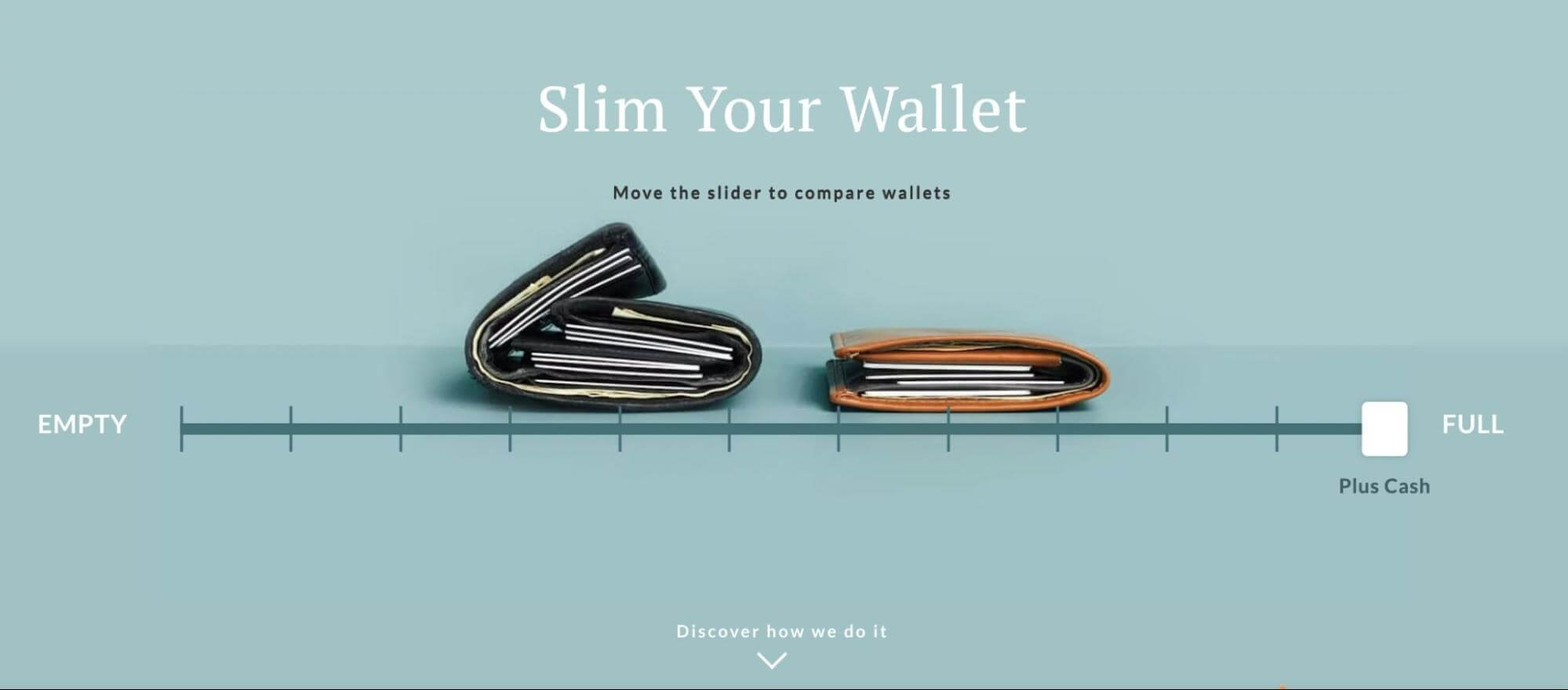
Bellroy product landing page

What makes this a good product landing page?

  • Bellroy’s main selling point is its slim wallet. The product landing page includes a slider that compares the Bellroy product to traditional wallets to advertise this feature. Placing this interactive animation at the top of the page can effectively hook new visitors.
  • The slogan “The same capacity, without the extra bulk” immediately explains the product’s purpose.
  • After the promotional material, Bellroy makes it easy to buy its wallets. Plus, these are organized into different types. Based on what customers carry daily, they can choose and purchase a wallet that meets their needs.

2. Copper Cow Coffee
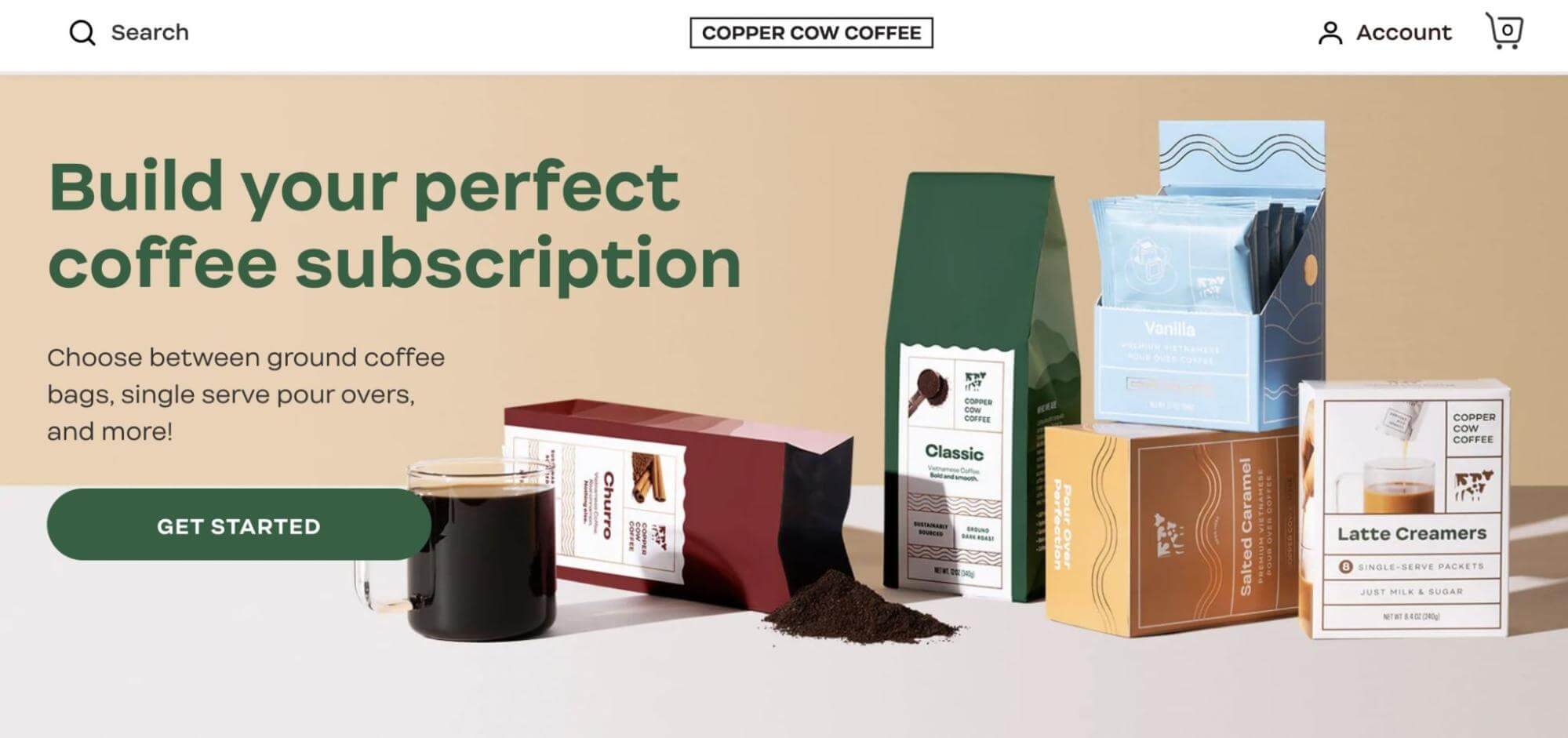
Copper Cow Coffee landing page

What makes this a good product landing page?

  • This product landing page starts with the action phrase “Build your perfect coffee subscription”. With this simple sentence, Copper Cow Coffee establishes who its target customers are and how they can benefit from these products.
  • Rather than promoting single bags of coffee, Copper Cow Coffee is promoting a subscribe-and-save option. Since this comes with a discount and delivery convenience, it can lead to more conversions.
  • Copper Cow Coffee is also transparent about what is included in each product box. Plus, new customers can create custom coffee boxes.
  • If visitors are still deciding whether to buy this coffee, they can read testimonials from satisfied customers.

3. Apple Airpods Max

Apple AirPods Max

What makes this a good product landing page?

  • What makes Apple stand out from other brands is its stunning visuals. The company showcases the AirPods Max headphones throughout this product landing page with aesthetic and engaging graphics.
  • Apple includes close-up videos of the product so that visitors can see the quality for themselves — paired with descriptive text, the media fully encompasses all the features of the AirPods Max.
  • The page primarily uses a simple black-and-white color scheme. It makes the product’s colors pop, drawing attention to its design.
  • Even as you scroll through the product’s features, the sticky header stays at the top of the page. This makes it easy to buy Apple headphones at any time.

4. Maserati MC20

Maserati landing page

What makes this a good product landing page?

  • The Maserati MC20 is a luxury car which is conveyed right from the start. This landing page lets the product speak for itself by including high-quality images of the exterior, interior, and engine.
  • One of the best features of the new Maserati is its speed. Visitors can press and hold the spacebar to simulate the car’s power. This will take them from 0 to 100km/h while watching a speedometer and hearing sound effects.
  • By clicking on Shopping Tools in the footer, potential customers can start building their first Maserati MC20. Alternatively, they’ll be able to find dealerships and schedule test drives.

5. Absurd Design
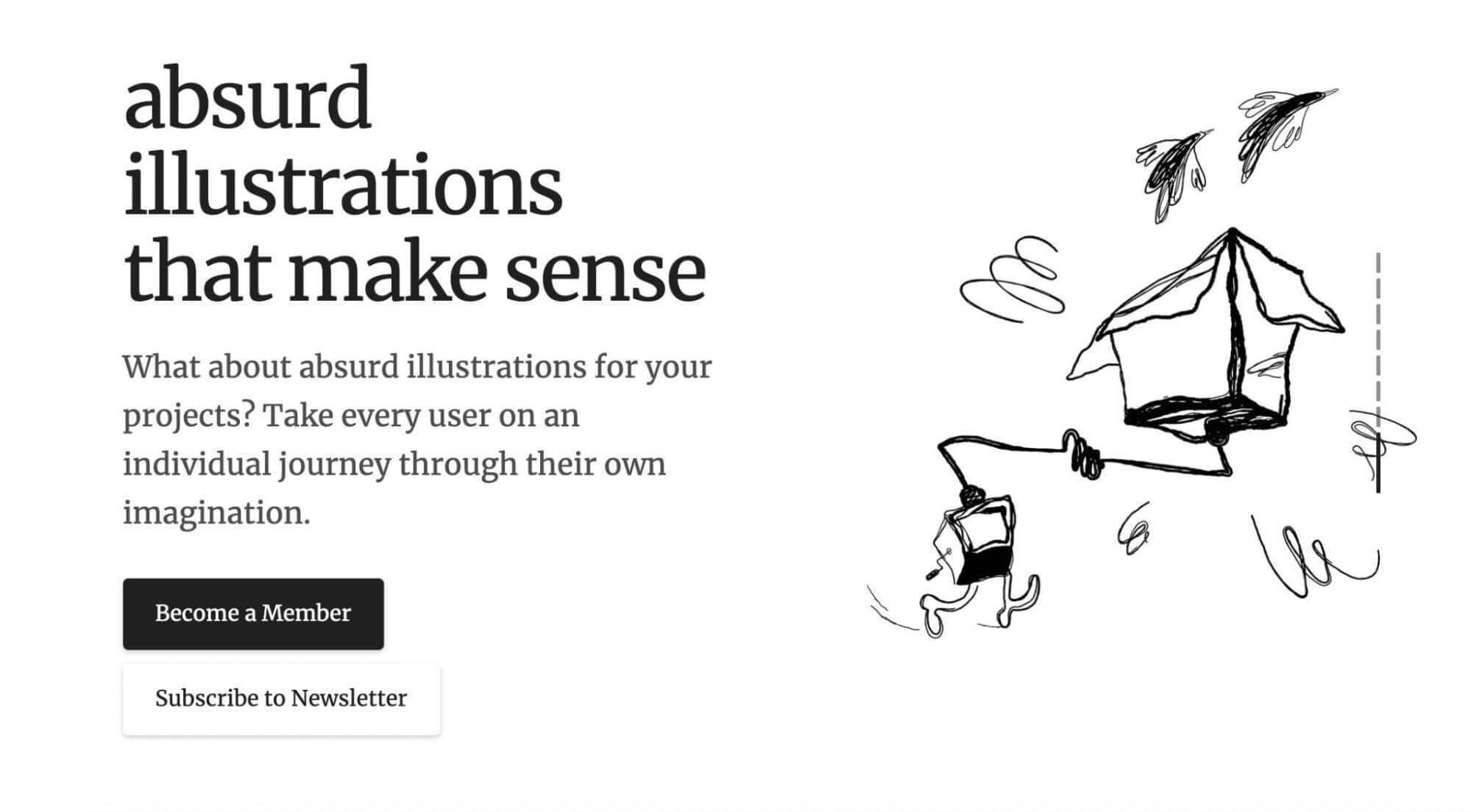
Absurd Design product landing page

What makes this a good product landing page?

  • Absurd Design was created by an independent artist who wanted to add a creative, human touch to any project. So, it makes sense that this landing page features unique and expressive artwork. This adds to the attractiveness of the web design while promoting the service.
  • There is a portfolio of commissions from previous clients. It portrays the design services in many different ways.
  • Absurd Design incorporates multiple calls to action on this landing page. Instead of promoting a physical product, it encourages visitors to become a member to see the new artwork. Plus, the creator adds a sense of urgency by saying there are not many seats available.

6. Square
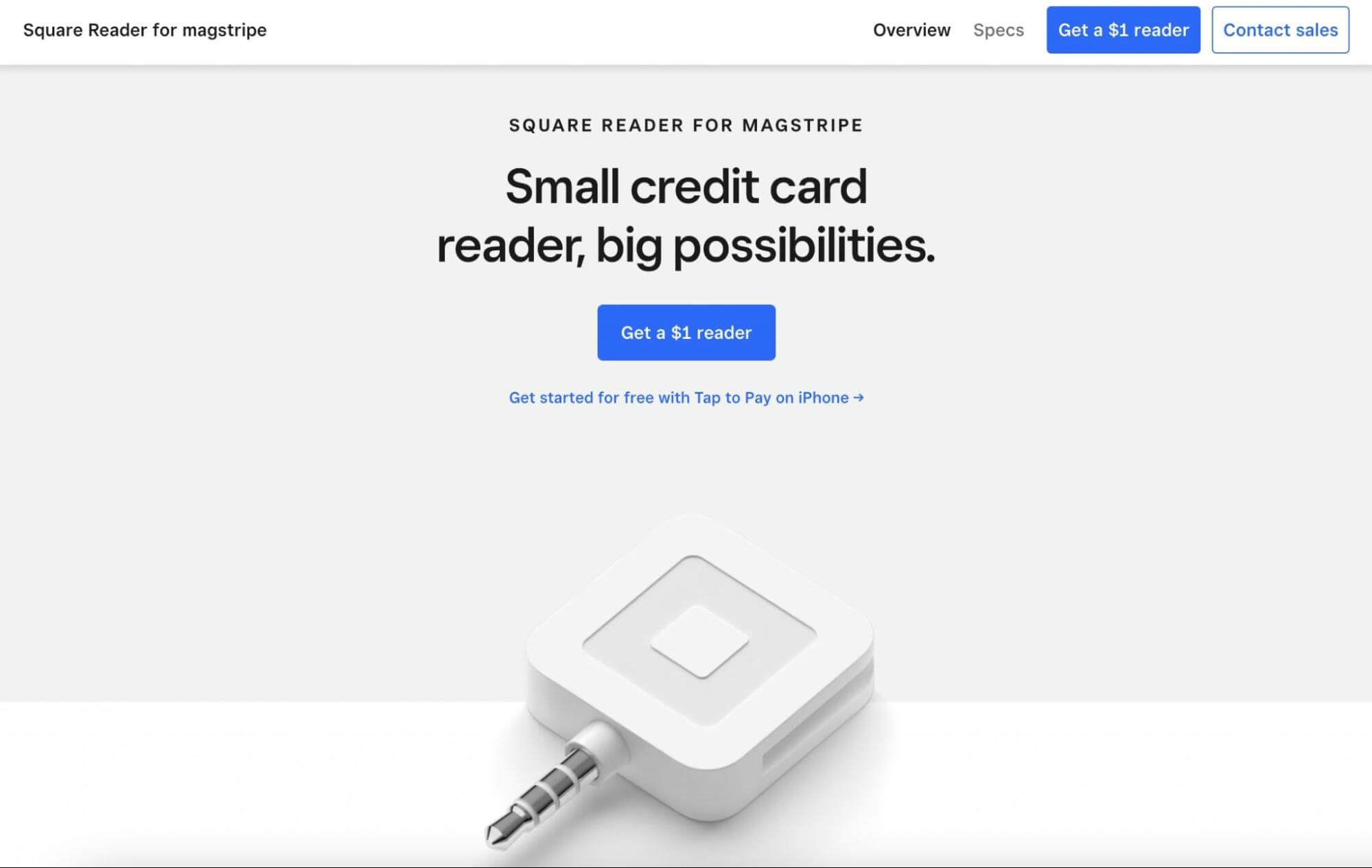
Square product landing page

What makes this a good product landing page?

  • With a more minimal design and color palette, Square provides a professional landing page for its square reader. Limiting flashy elements allows visitors to focus on the product and its main features.
  • At the top of the page, Square draws in new customers with a simple but clear headline. The call-to-action button also includes transparent pricing to encourage conversions.
  • This product landing page features many high-quality images of the Square reader being used. New visitors can see its size and how it will work with different devices.
  • To ensure every question is answered, the bottom of the page includes a Frequently Asked Questions section.

7. Draggable
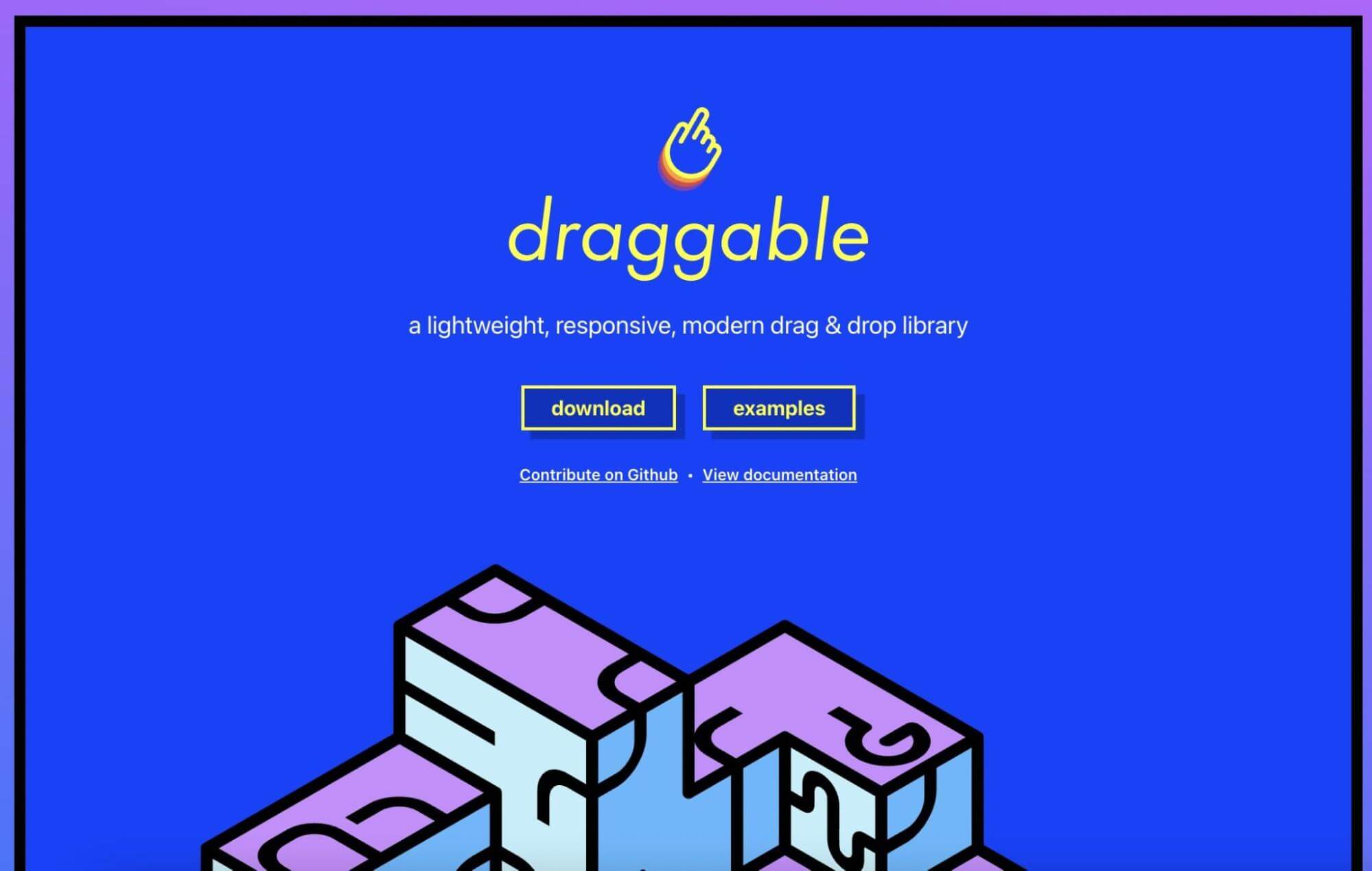
Draggable landing page

What makes this a good product landing page?

  • Draggable has a simple but highly effective landing page for its product. To explore its drag-and-drop JavaScript library, you can physically drag and drop different design elements on the page.
  • All of Draggable’s features are shown with unique animations. For example, customers can trade different elements in the Document Object Model (DOM). Underneath this feature, the designers have enabled visitors to rearrange different building blocks.
  • Plus, it’s easy to start using Draggable. New customers can simply click on the Download button. If visitors need further convincing, there are also links to documentation and excellent examples of the product in action.

8. Orangina
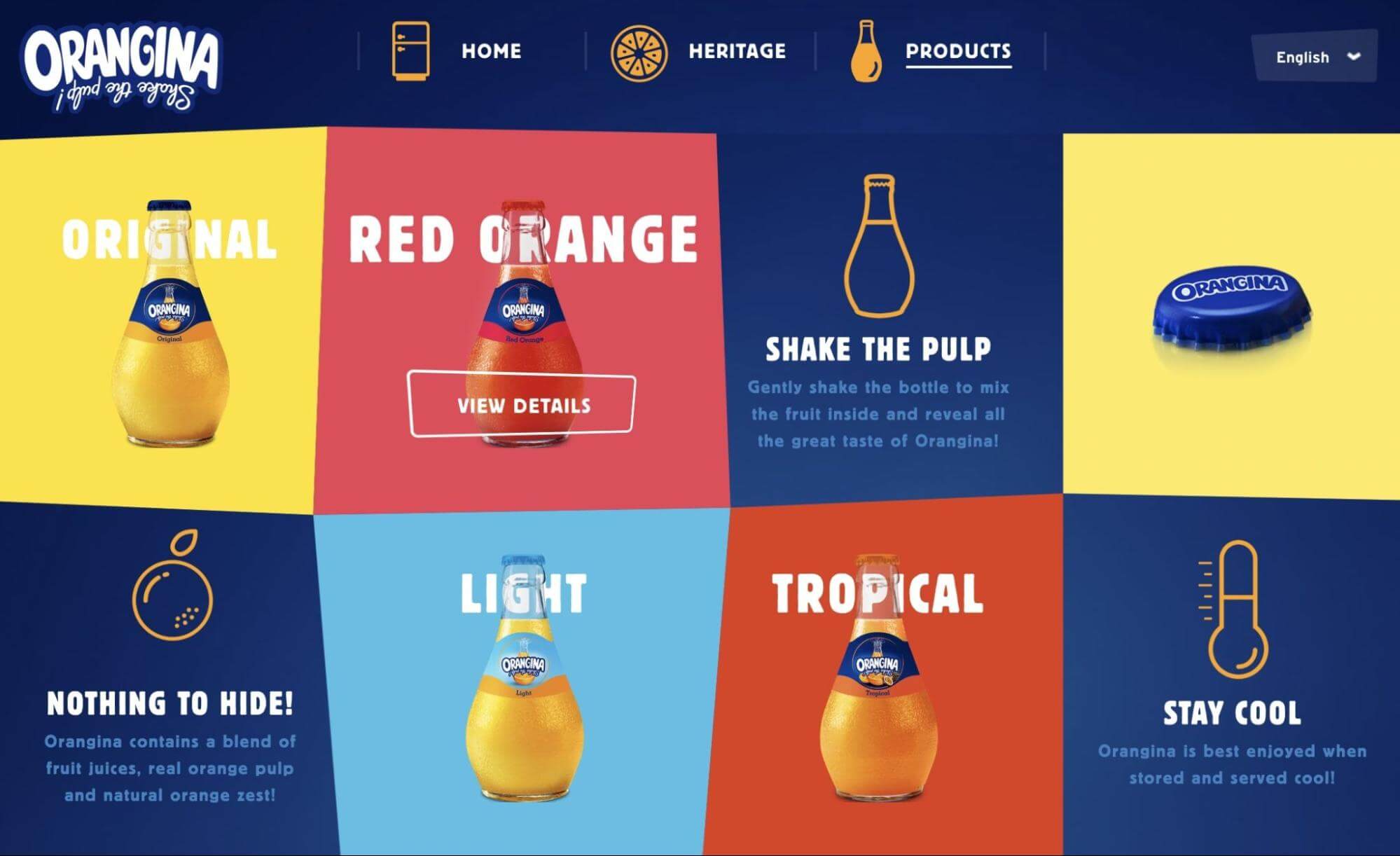
Orangina landing page

What makes this a good product landing page?

  • Orangina rejected the typical landing page format and placed all the information above the fold. Instead of having to scroll through a lengthy page, visitors can immediately see the company’s different products.
  • Orangina included all the different flavors of fruit juices in a grid. After hovering your mouse over a specific product, you’ll see an animation with an action button to see more details.
  • Potential customers can also see the company’s core values. By advertising that every product contains real fruit juice, Orangina reassures visitors that they’re receiving a high-quality drink.

9. Helix Sleep
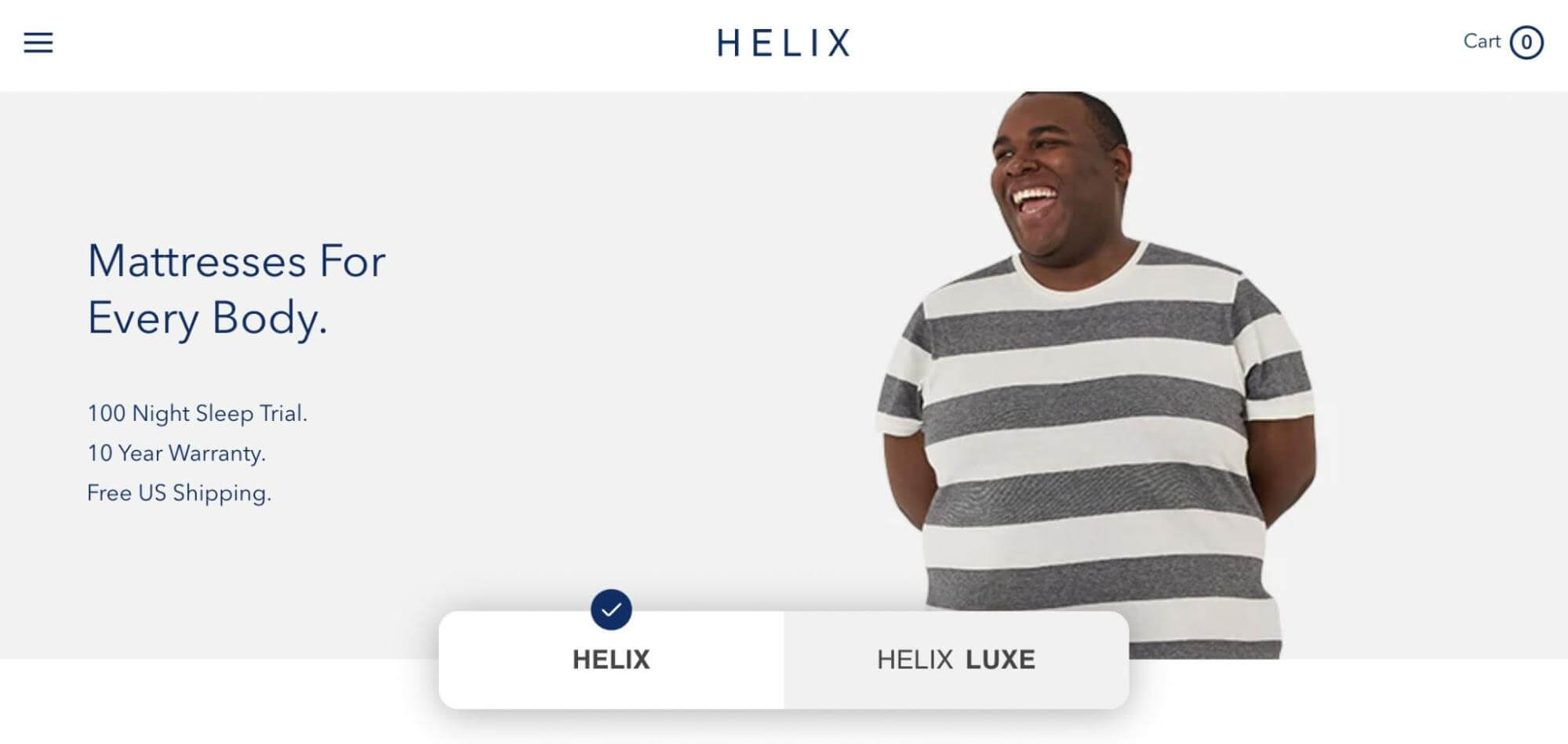
Helix mattresses landing page

What makes this a good product landing page?

  • This product landing page starts with the headline “Mattresses for every body”. It immediately tells visitors that they can find a mattress that suits their sleeping needs.
  • Although Helix makes many mattresses, they’re organized by firmness. As a result, prospective customers can choose between soft, medium, and firm feels. Helix also recognizes that taller people and children will need more specific options.
  • Helix includes a link to a sleep quiz to enable visitors to find the right type of mattress. It can prevent customers from having to return products.

10. Cowboy 4
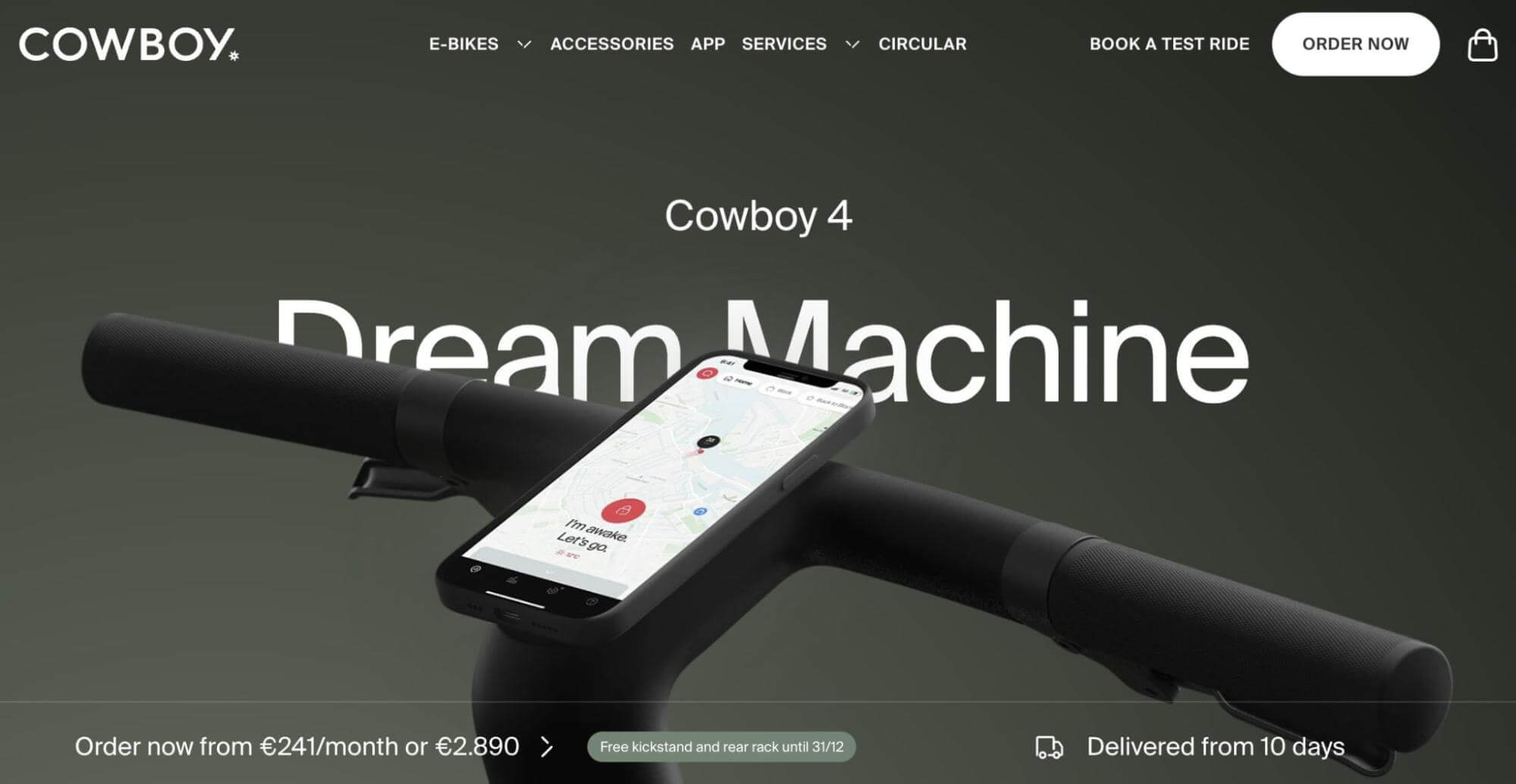
Cowboy landing page

What makes this a good product landing page?

  • When visitors click on this landing page, the Cowboy 4 is shown in a high-resolution video. As you scroll, you can see close-up perspectives of specific features like the gears and the removable battery.
  • One of the main selling points is the bike’s compatibility with phones. Therefore, Cowboy shows the wireless phone charging and the app integration in many images. New customers can see how this bike makes navigation easier.
  • Cowboy also offers a free test ride to try out the bike before buying it. This CTA is shown throughout the page, as well as in the header and footer.

11. Daily Harvest
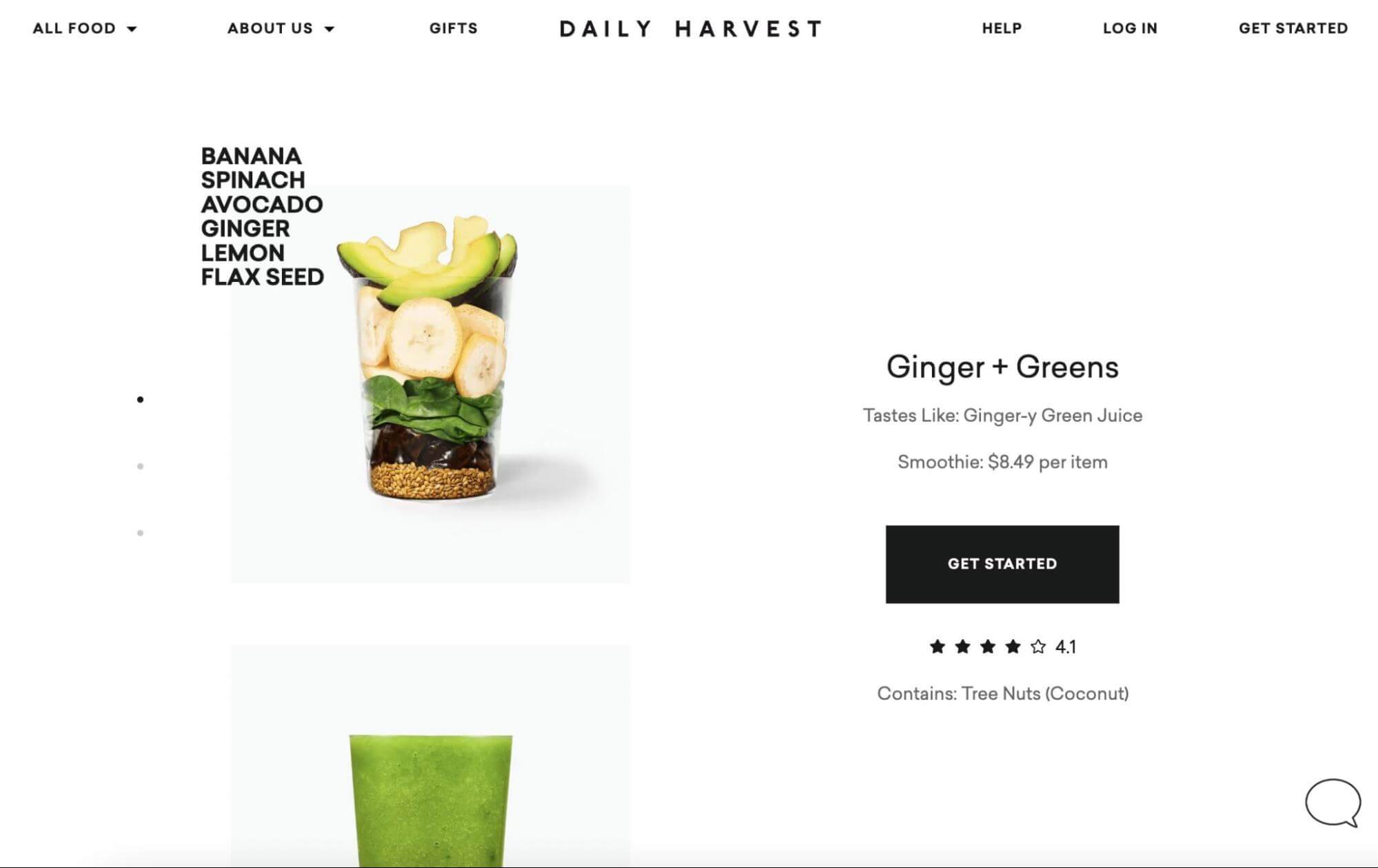
Daily Harvest landing page

What makes this a good product landing page?

  • Another minimal product landing page is from Daily Harvest. This company showcases simple and bright photos of its ginger and greens juice blend. Plus, customers can see the individual healthy ingredients before they’re blended.
  • To promote healthy living, Daily Harvest is transparent about product ingredients. Along with this list, there’s information about how each ingredient tastes, as well as its nutritional value.
  • New customers can decide whether to buy this product based on the reviews. This section will show star ratings and tips from other customers.

12. Oura Ring
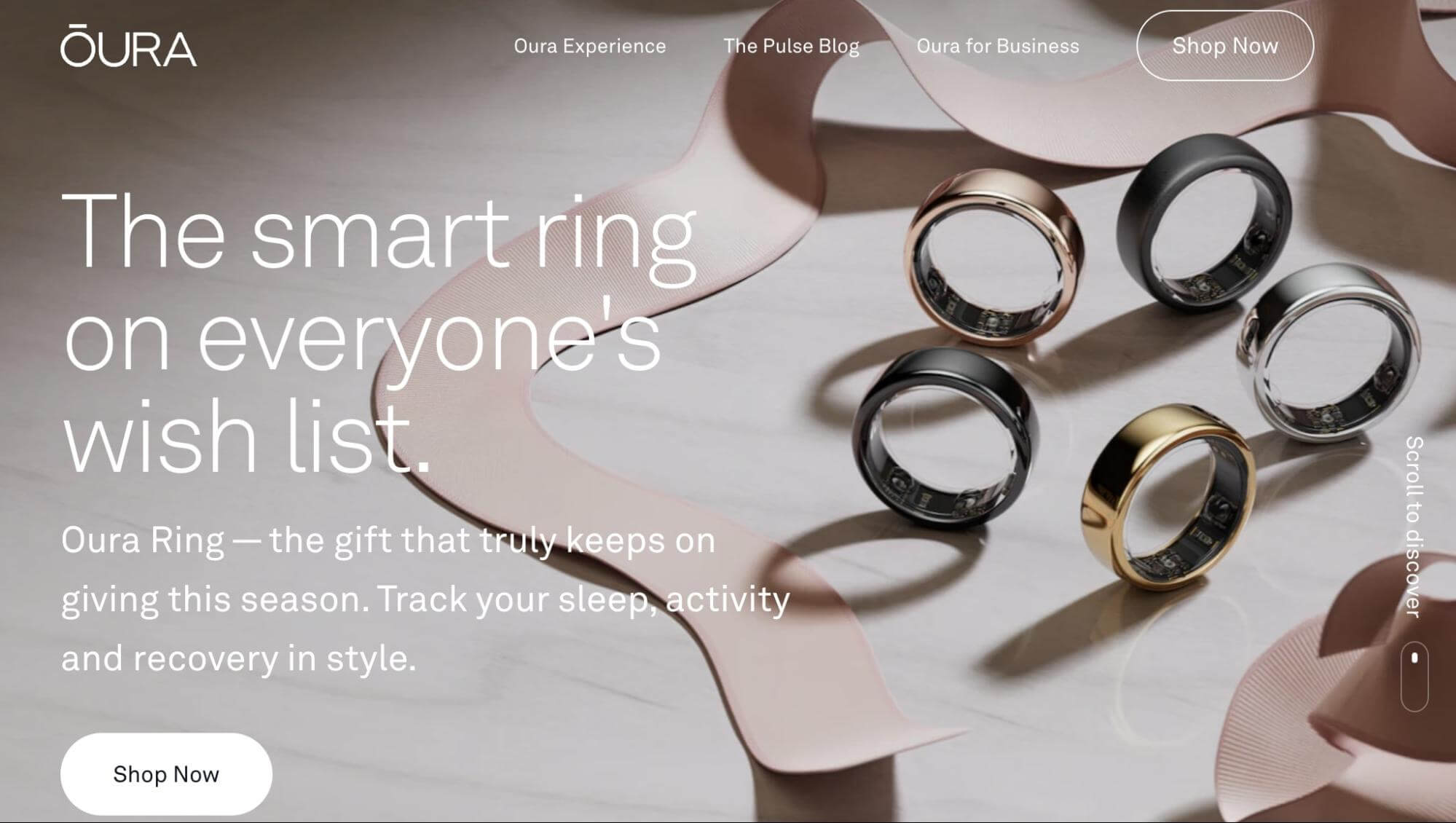
Oura Ring landing page

What makes this a good product landing page?

  • When designing your product landing page, you’ll want new visitors to know what your product is and what it does. Oura Ring does this successfully. From the get-go, visitors understand that these smart rings can monitor their health and fitness.
  • Oura Ring’s audience will likely wonder how these rings can benefit their daily lives. This landing page answers these questions by including detailed statistics about how current members improved their health.
  • Finally, Oura Ring recognizes its competitors. On this landing page, there is a note that heart rate is more accurately measured from the finger rather than the wrist. This data differentiates smart rings from smartwatches.

13. Recess
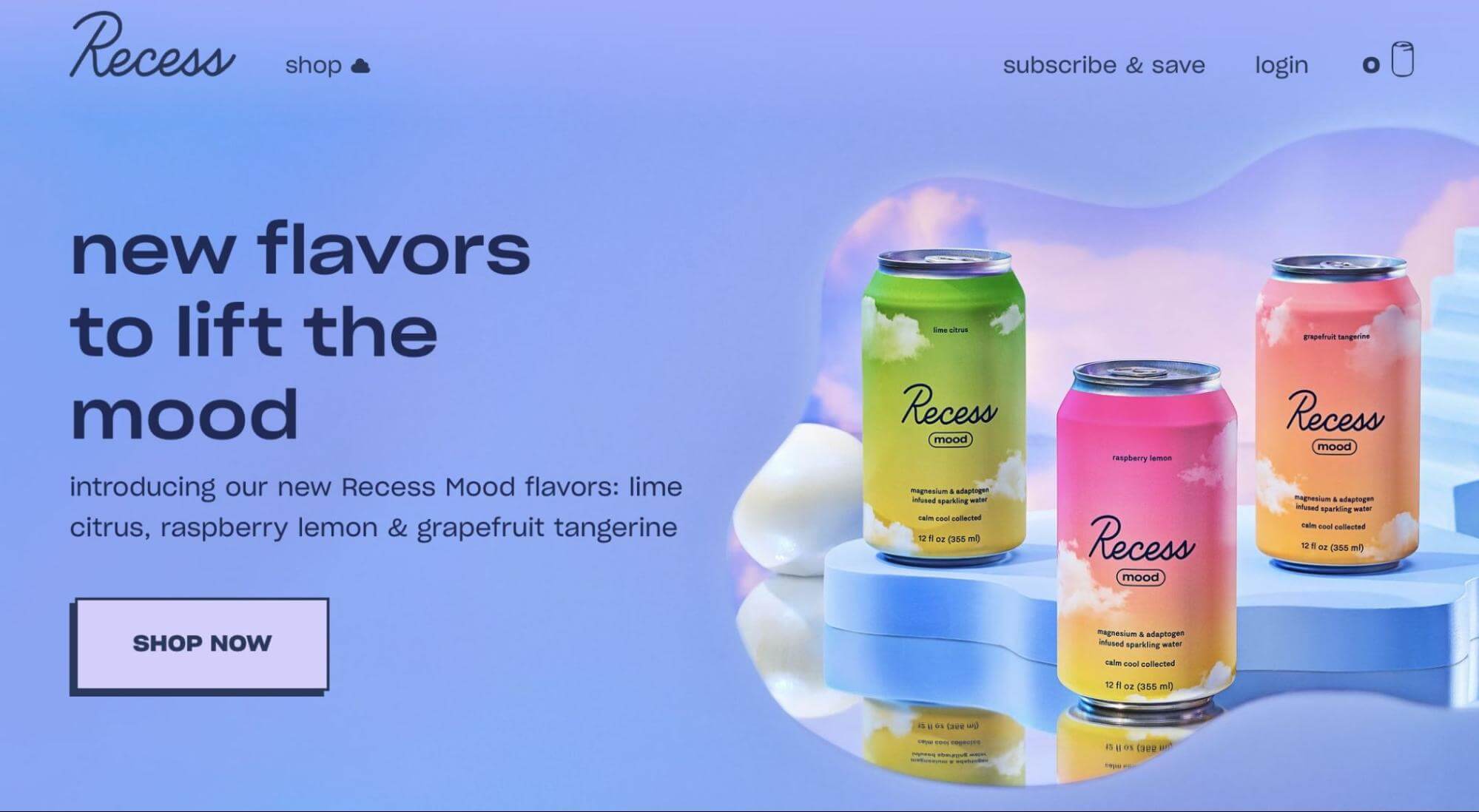
Recess landing page

What makes this a good product landing page?

  • Recess’s brand is all about lifting your mood. To promote its drinks and powders, the Recess product landing page has a peaceful design and pastel color palette.
  • Further aligning with this brand, the background is a blue sky with puffy white clouds. Then, the Recess drinks appear to lift into the sky with motion animations.
  • For new customers, Recess directs them to shop for sampler collections. This enables indecisive visitors to try different drinks and find their favorite flavor.

14. Asana
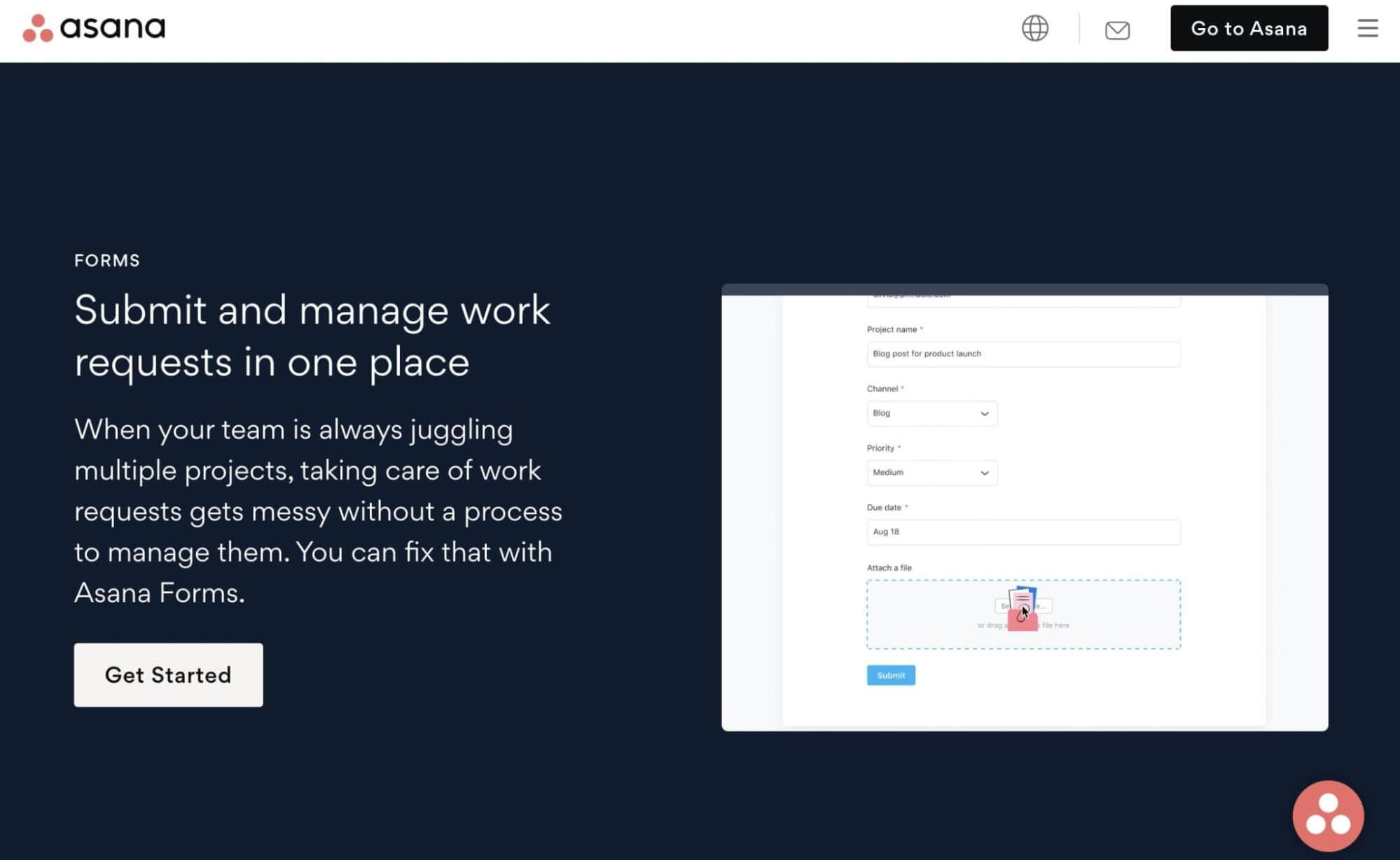
Asana Forms landing page

What makes this a good product landing page?

  • Asana aims to solve the problem of managing multiple work requests within one team. On its landing page, the company claims that the Asana Forms feature can make this process easier.
  • When potential customers visit this page, they’ll see three main benefits of Asana Forms. The tool can enable them to easily organize requests, customize forms, and reduce manual work.
  • Many teams will want to kickstart their workflow rather than build them from scratch. Asana includes a list of templates that customers can use for work requests, web design, and IT requests.

15. Monday.com
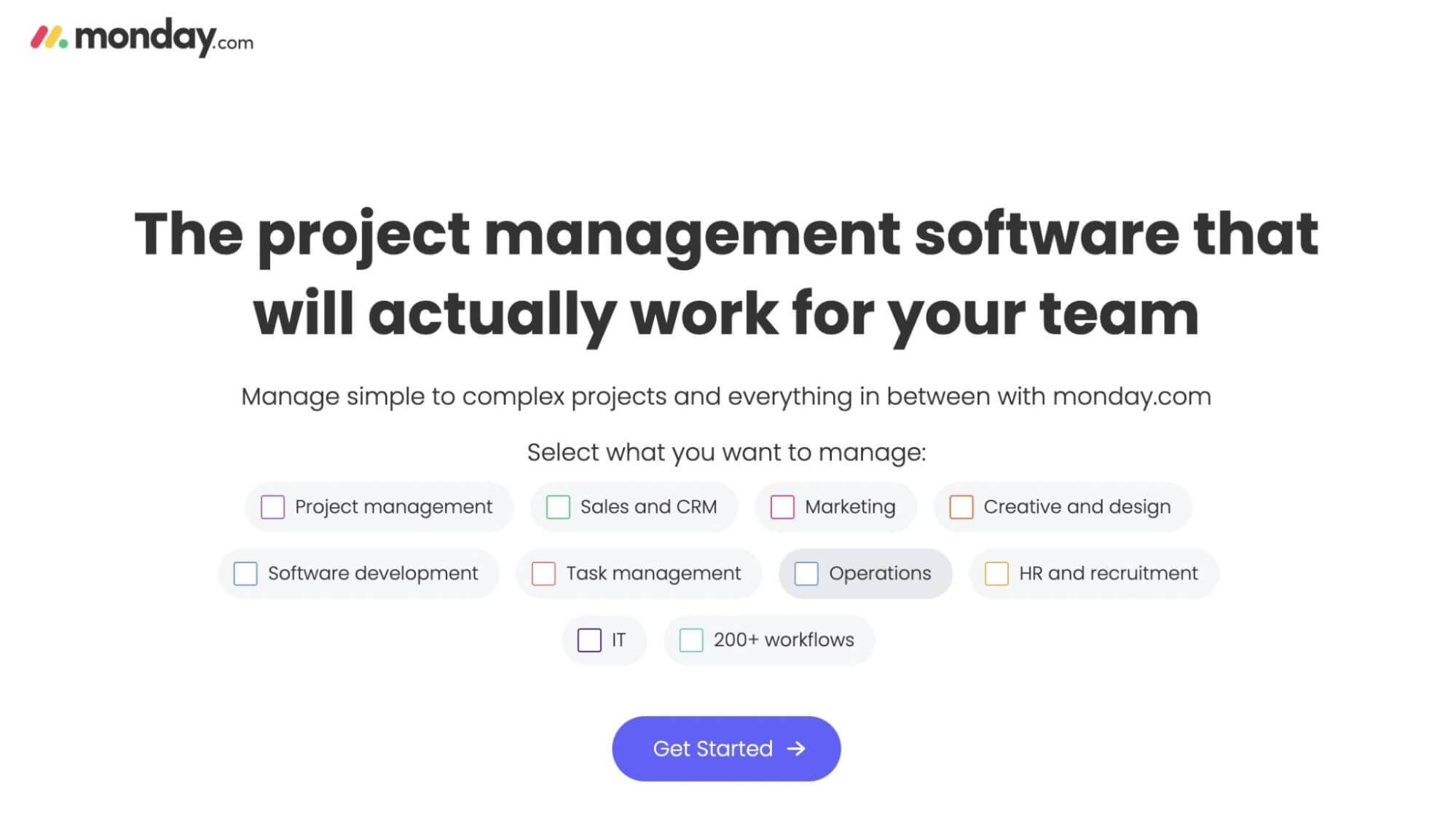
Monday.com landing page

What makes this a good product landing page?

  • Another company that knows its audience is Monday.com. On the landing page for its project management software, new customers can choose which projects they’ll be working on.
  • Next to specific features, Monday.com includes videos of the main dashboard. These show the product’s ease of use.
  • Since this software is supposed to make teams more efficient, Monday.com features actual statistics from a client. Using Forrester as an example, the company shows an increase in Return On Investment (ROI), net value, saved hours, and meeting reduction.

16.  Mango Languages

Mango Languages landing page

What makes this a good product landing page?

  • In contrast with its colorful logo, Mango Languages uses a more minimal design for its product landing page. To match the “Language is an adventure” slogan, there is a video that auto-plays footage from different places and cultures.
  • When users want to learn about the language-learning app, they’ll immediately see its high star ratings on Google Play and the Apple Store. Mango Languages even claims to have higher ratings than its competitors.
  • Mango Languages also clearly defines how its app works. You’ll start by learning a new language with a tested linguistic methodology. Then, using voice technology, you can test your skills compared to native speakers.

17. ClickUp
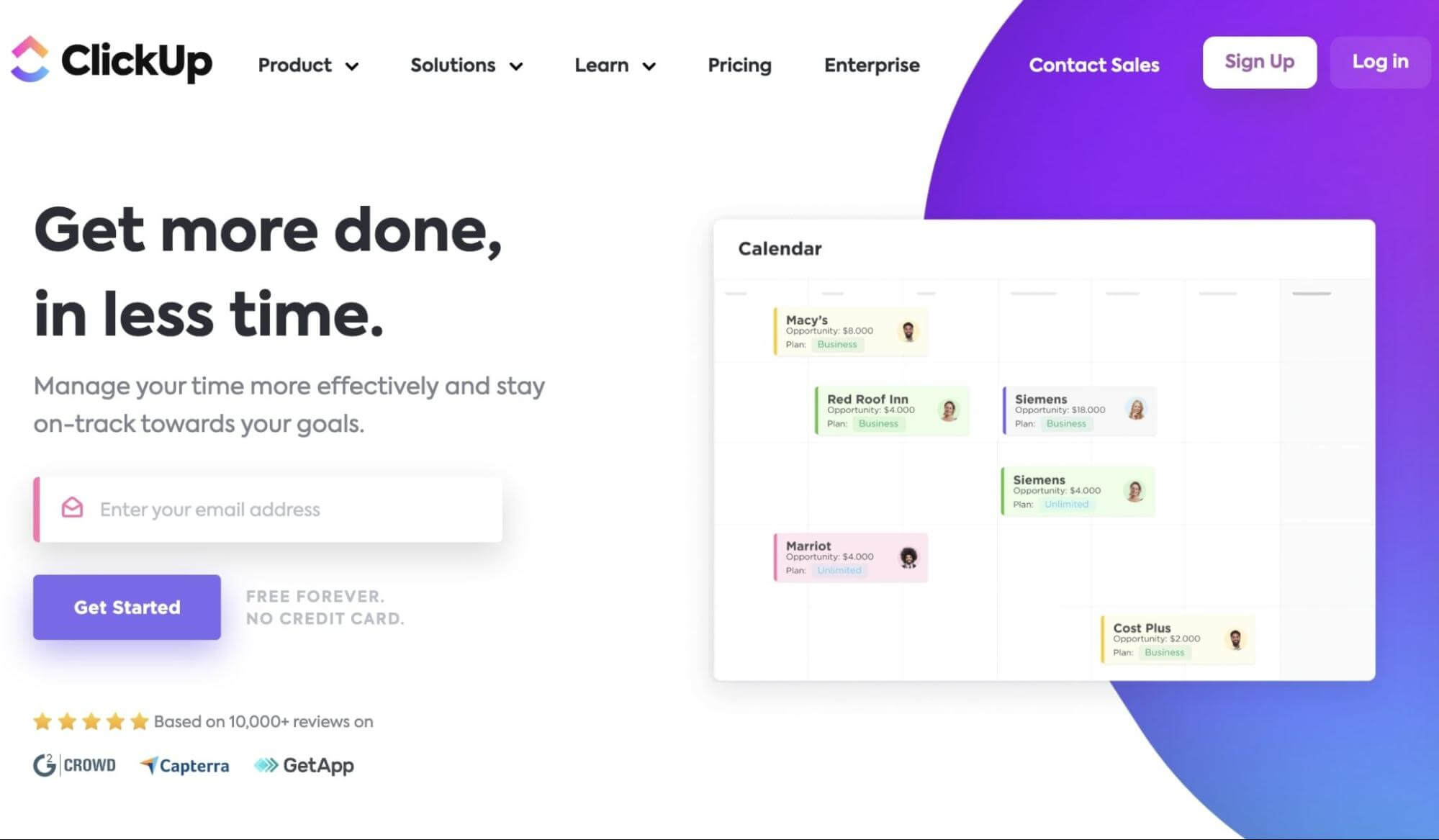
ClickUp landing page

What makes this a good product landing page?

  • ClickUp introduces its time-saving project management tool with the effective headline “Get more done in less time”. This is a simple way to summarize the product and solve a problem for customers.
  • This product landing page displays the various ways you can view and organize your project calendar.
  • Customers can also see specific time-saving features. ClickUp integrates short videos of its dashboard to show how easy it is to create timesheets, bills, milestones, and more.

18. Olipop
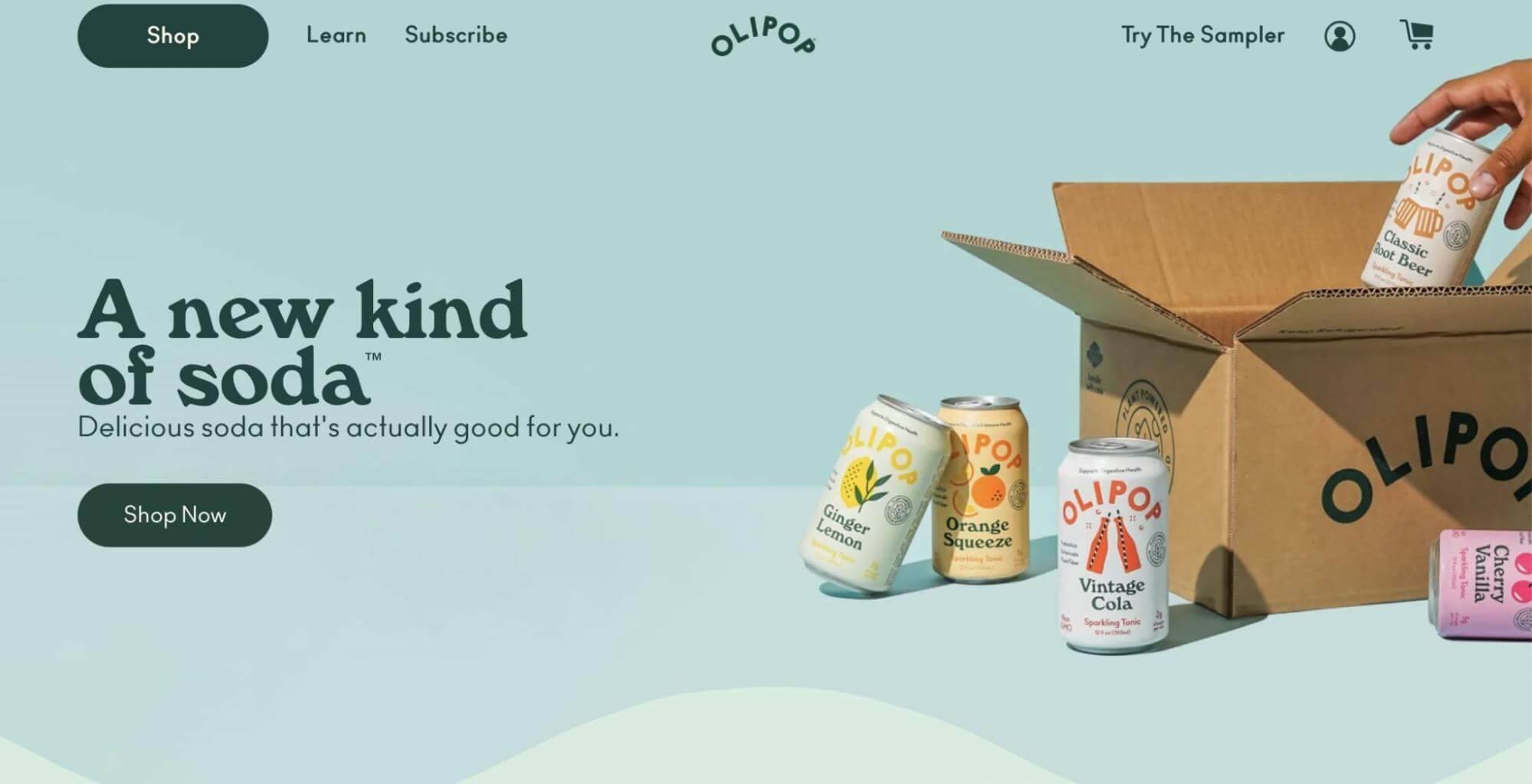
Olipop product landing page

What makes this a good product landing page?

  • As a soda manufacturer, Olipop realizes the negative perception of the drink. To combat this, its product landing page features the slogan “Delicious soda that’s actually good for you”.
  • To boost brand recognition, Olipop advertises six different flavors in a sampler pack. New visitors can see the nutritional benefits of this product and easily purchase it from the landing page.
  • Plus, a table directly compares Olipop with other soda brands. This shows that Olipop has less sugar and calories, which can appeal to a health-conscious buyer.
  • Olipop also includes articles from popular news sources to boost the company’s credibility.

19. Tala

Tala landing page

What makes this a good product landing page?

  • The landing page for Tala’s mango snacks features a dark background and white text. This draws more attention to the bright yellow product images.
  • Tala’s selling point is that it only uses one ingredient. The landing page emphasizes this feature with minimal text.
  • New customers can purchase this product directly from the landing page. They can also easily enter their email address to subscribe to the company’s email newsletter.

20. Dollar Shave Club
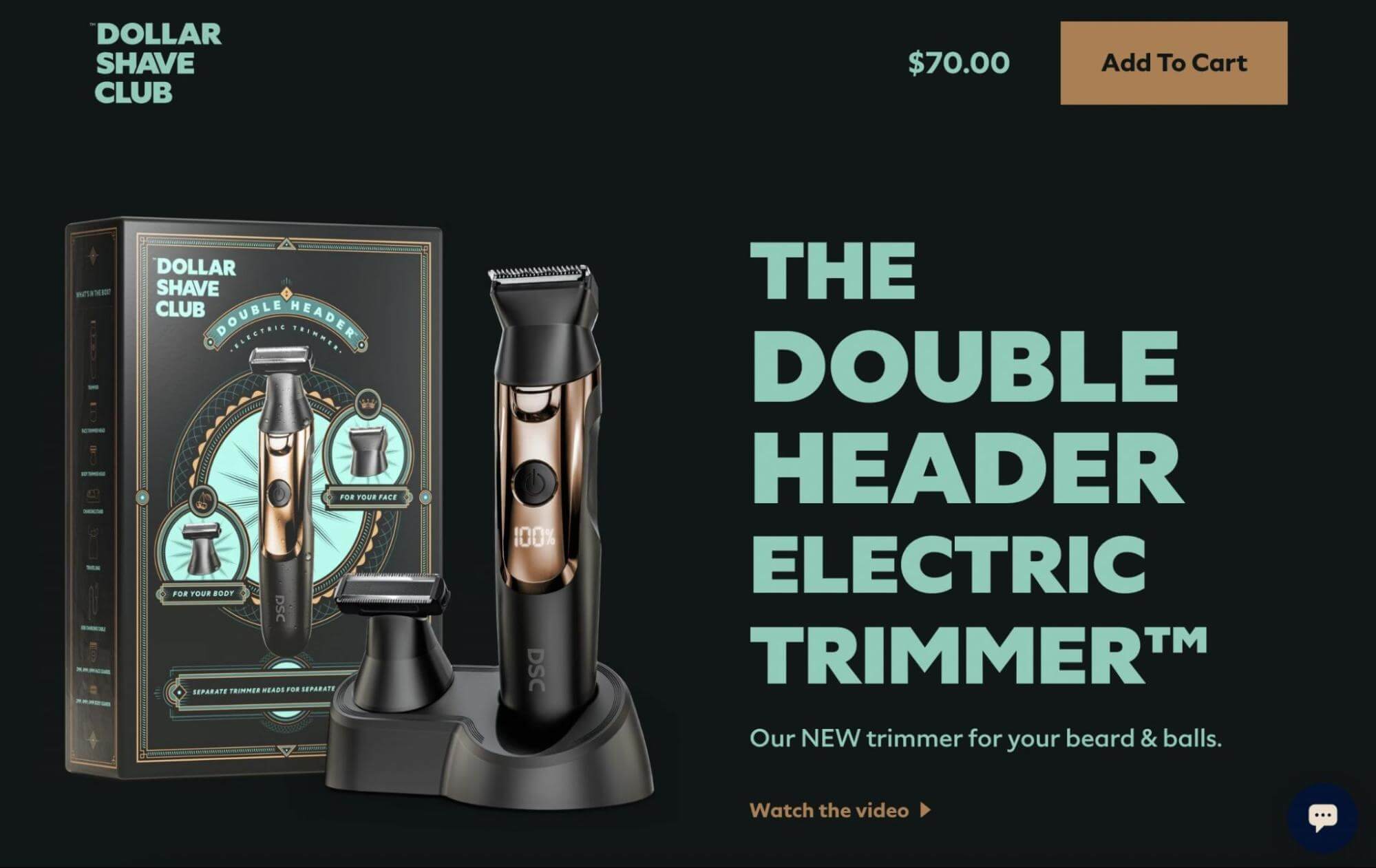
Dollar Shave Club landing page

What makes this a good product landing page?

  • Dollar Shave Club designed the landing page to match the product itself. Instead of using brand colors, the background, text, and buttons use the new trimmer’s color palette.
  • Like the rest of the Dollar Shave Club website, the text has elements of humor and personality.
  • To highlight the new features of this product, there is a close-up, revolving animation. It moves as visitors scroll through the list of features.
  • Dollar Shave Club also directly compares this product with an older version. This shows new customers that they’re constantly finding new and innovative ways to improve their products.

21. Sandland
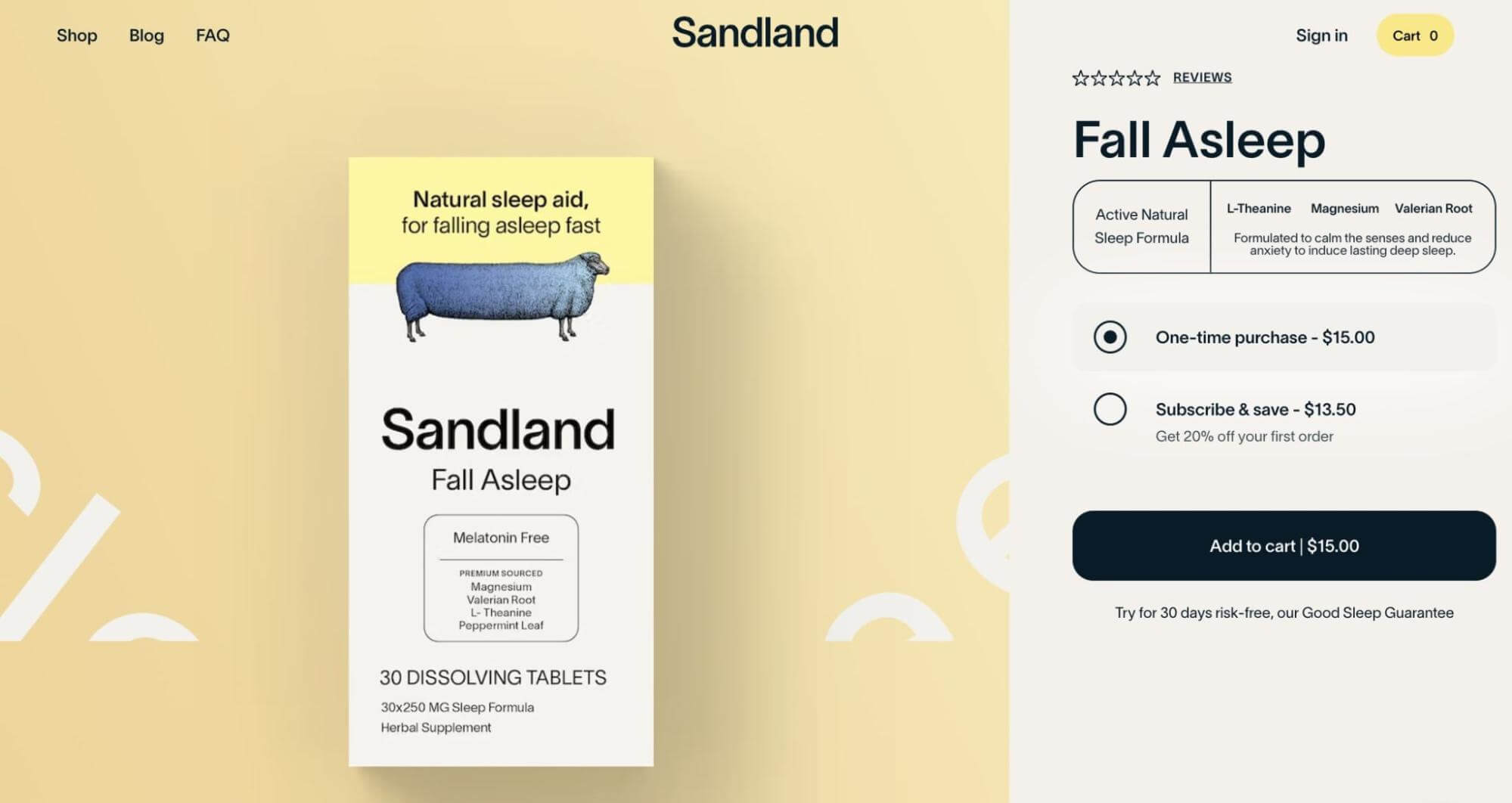
Sandland landing page

What makes this a good product landing page?

  • Sandland’s product landing page features calm, relaxing visuals. To match its sleep-focused brand, there is a slowly moving animation behind the product image.
  • The company makes it easy to immediately purchase sleeping tablets and even select a subscribe-and-save option.
  • Since people want to be confident that they’re receiving a tested product, Sandland includes the research behind the ingredients. This shows visitors how elements like valerian root and magnesium will improve their sleep.
  • Sandland also compares its sleeping pills with other companies, highlighting the product’s main features.

22. Stripe
Stripe landing page

What makes this a good product landing page?

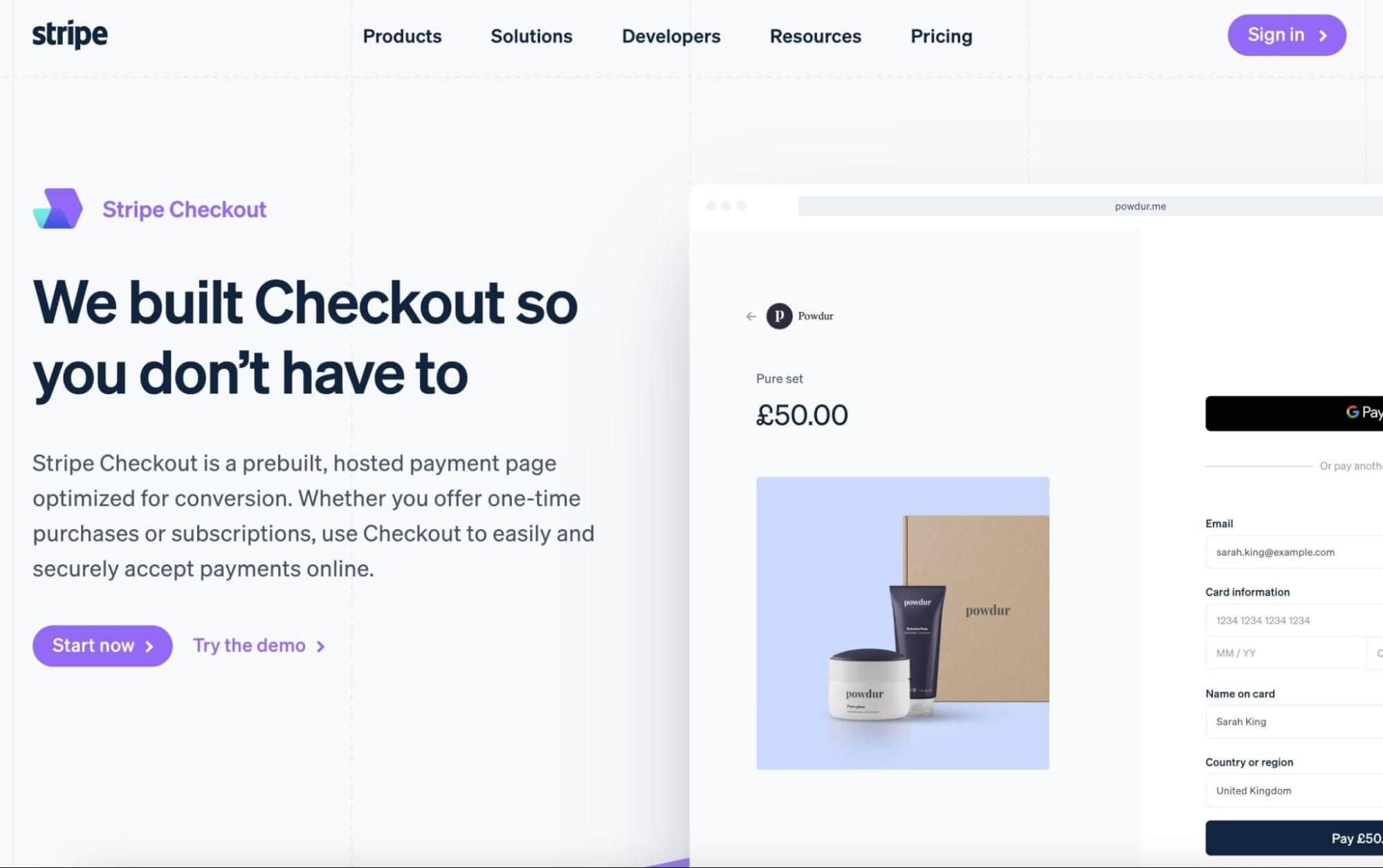
  • By adding the headline “We built Checkout so you don’t have to”, Stripe immediately solves a problem for visitors. It introduces Stripe Checkout as a beginner-friendly way to create payment pages.
  • Next to each key feature is an animation of the checkout page. Instead of simply reading about the product, visitors will see it in real-time.
  • Stripe also breaks down the different pricing options in detail. By making this information transparent, potential customers don’t have to worry about unexpected fees.

23. Beardbrand
Beardbrand landing page

What makes this a good product landing page?

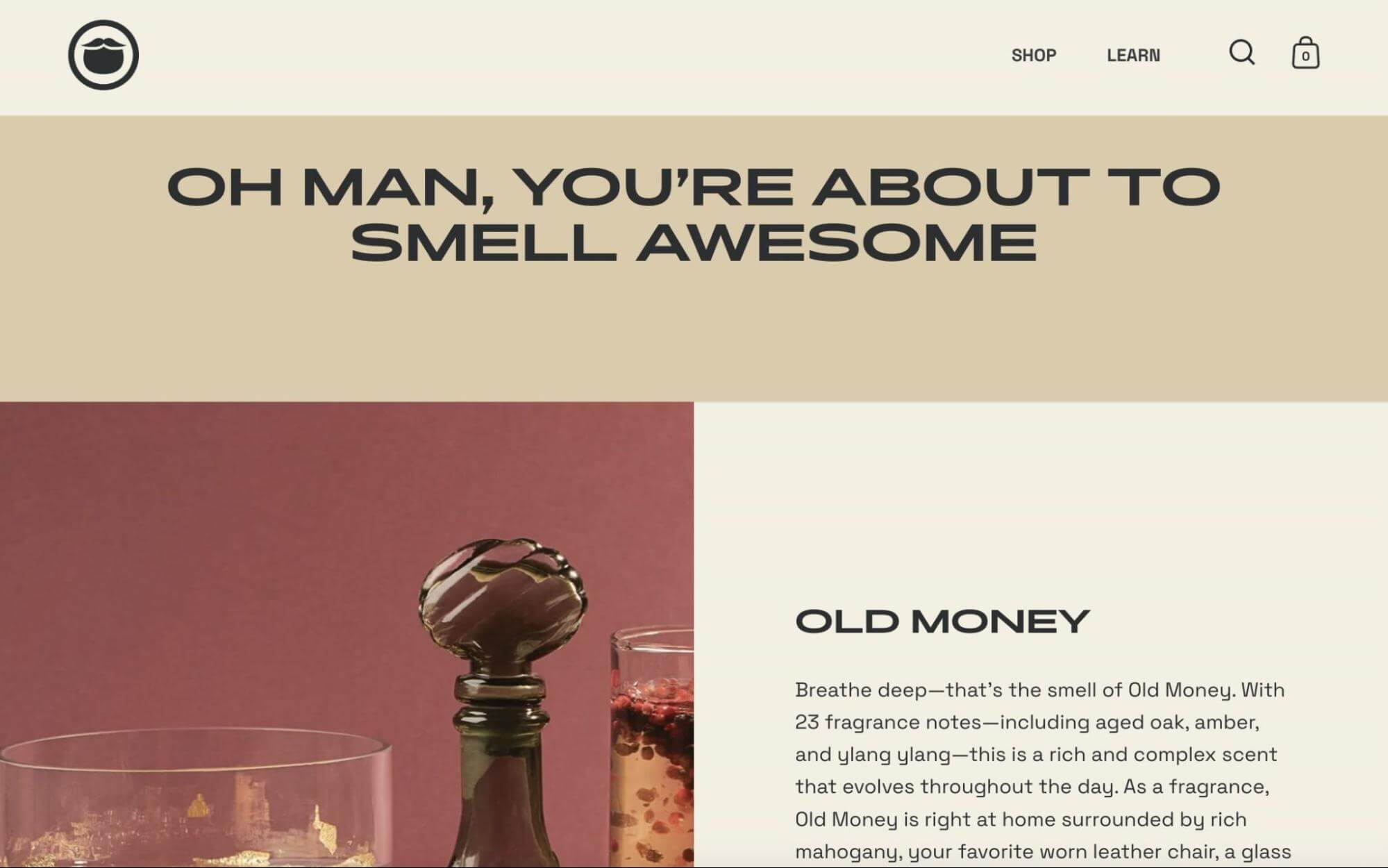
  • To advertise its new fragrance line, Beardbrand brings an aura of sophistication and elegance to its product landing page. With an earthy color palette, customers are immediately introduced to the rich Old Money scent.
  • It can be difficult to sell cologne online because visitors can’t physically smell it. However, Beardbrand describes each scent’s primary notes and fragrance family. Plus, there are links to cologne samples and custom kits.
  • There is a story behind each fragrance. This makes the product landing page much more engaging and fun to read.

24. Hilma 
Hilma landing page

What makes this a good product landing page?

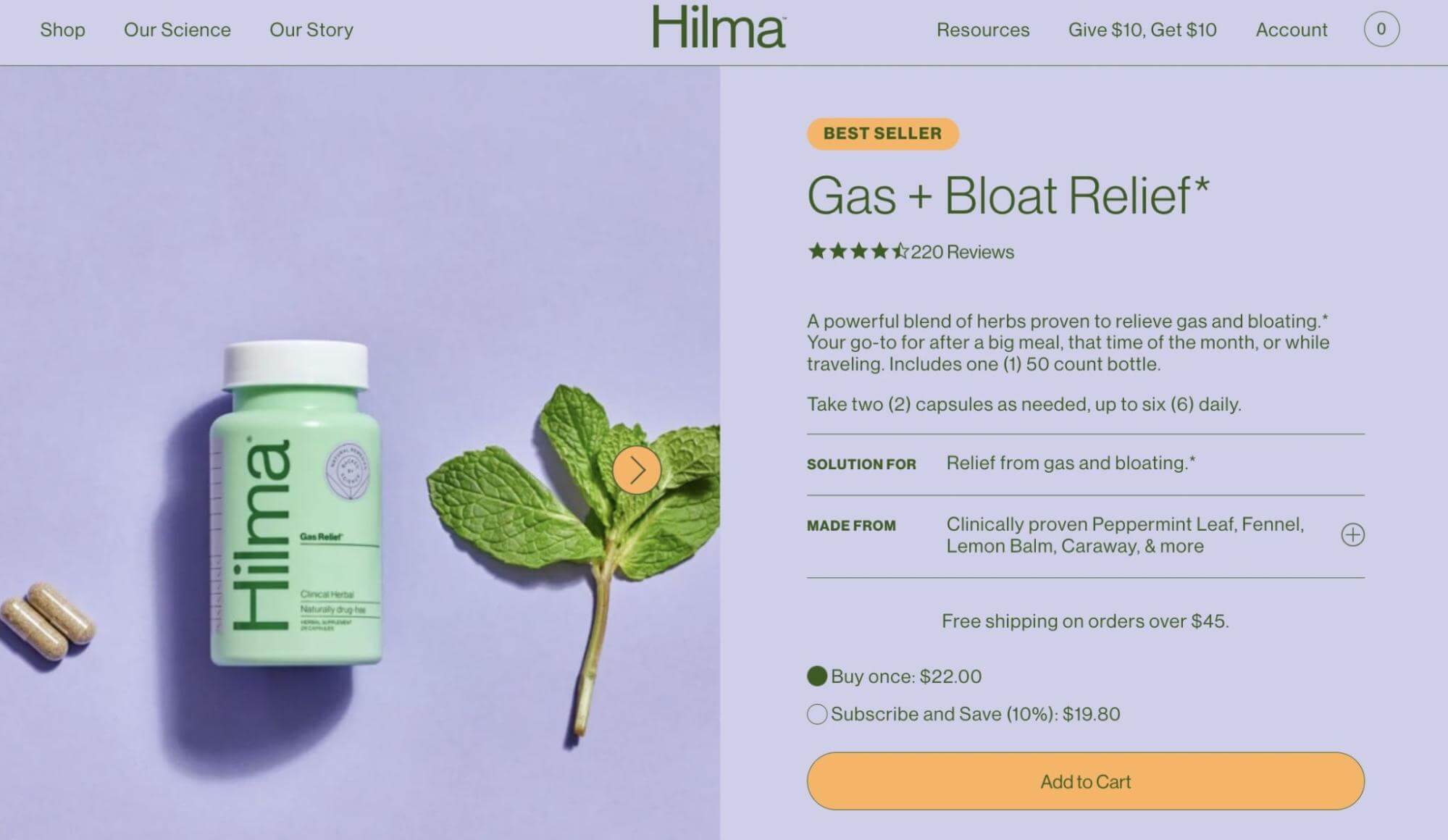
  • Every element in the web design is intentionally created to blend with Hilma’s website. The purple background even matches the product’s label. With orange action buttons, any new customers can easily navigate through the product landing page.
  • There are icons that represent Hilma’s clean and natural ingredients. These are featured with the company’s calming brand colors.
  • In contrast to the included ingredients, Hilma features its zero-tolerance policy. This bright red list shows customers the company’s dedication to healthy lifestyles.
  • At the bottom of the page, users can see and filter reviews from previous customers.

25. Memorisely

Memorisely landing page

What makes this a good product landing page?

  • Since this landing page advertises a web design bootcamp, it makes sense that it is easy to navigate. The designers include a table of contents that sticks to the side of the page so that users can quickly find the information they need.
  • Before users sign up, they can see a detailed schedule of the online courses. By having this information beforehand, customers can fit the live sessions into their daily lives.
  • Memorisely is also transparent about pricing. This sets them apart from other course providers and makes learning more accessible.

26. TKEES
TKEES landing page

What makes this a good product landing page?

  • TKEES introduces its new shoe collection with a product video. It automatically shows visitors clips of the sandals being worn.
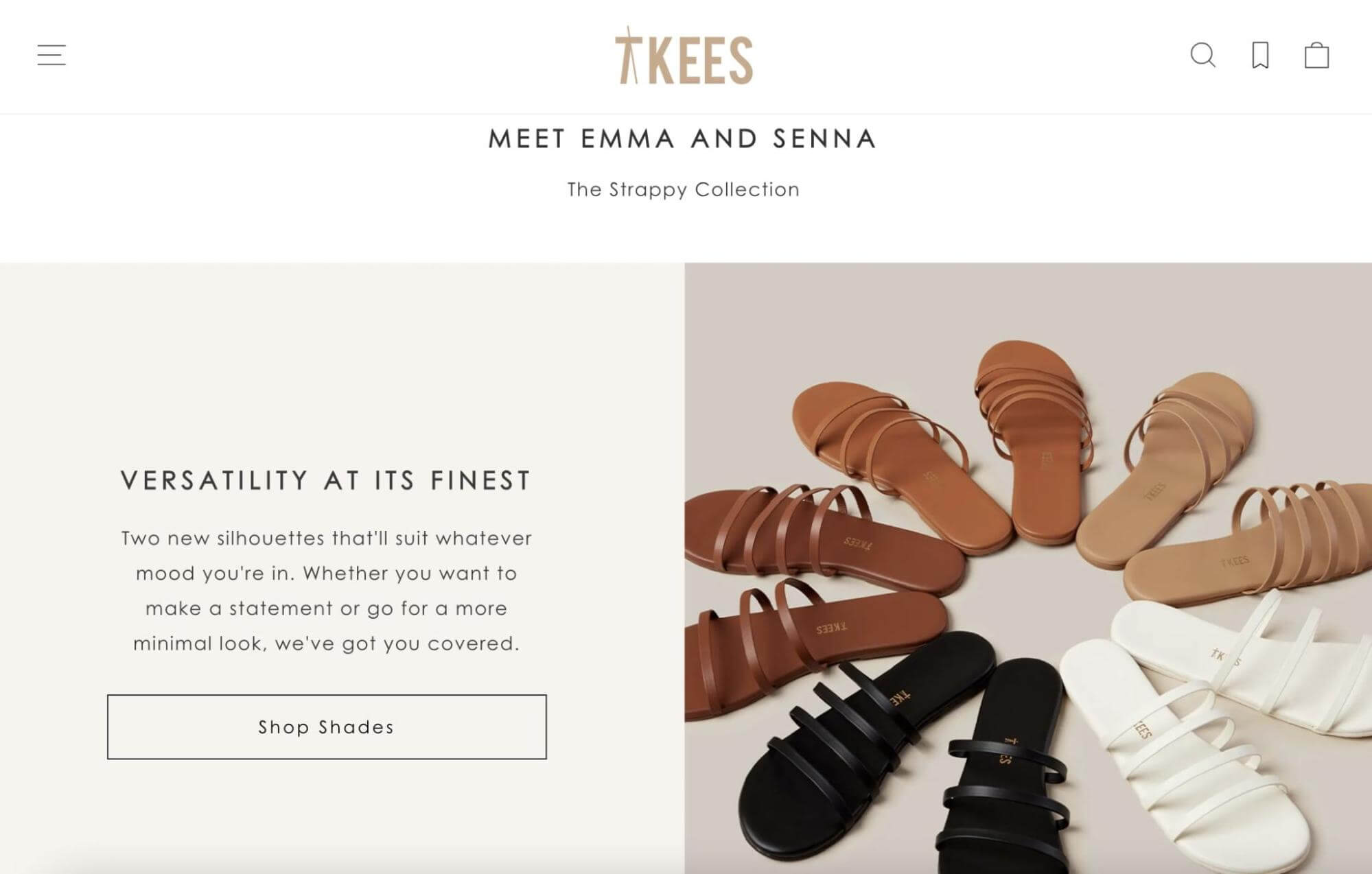
  • The landing page’s design and layout fit well with the advertised products. Since TKEES promotes timeless and classic shades, the page features a mix of neutral colors.
  • Clearly visible action buttons direct users to shop for new products. These link to two different variations depending on the customer’s needs.

27. Behave

Behave product landing page

What makes this a good product landing page?

  • Rejecting a minimal color scheme, Behave uses vivid shades for this landing page. It reflects the bright-colored gummies and makes the page more unique and engaging.
  • Behave primarily uses images and graphics instead of large blocks of text. Limiting any unnecessary information draws more attention to the candy itself.
  • There are positive reviews from popular magazines like Business Insider. Since Behave is competing with well-known candy companies, these testimonials can boost brand awareness.

28. Webflow
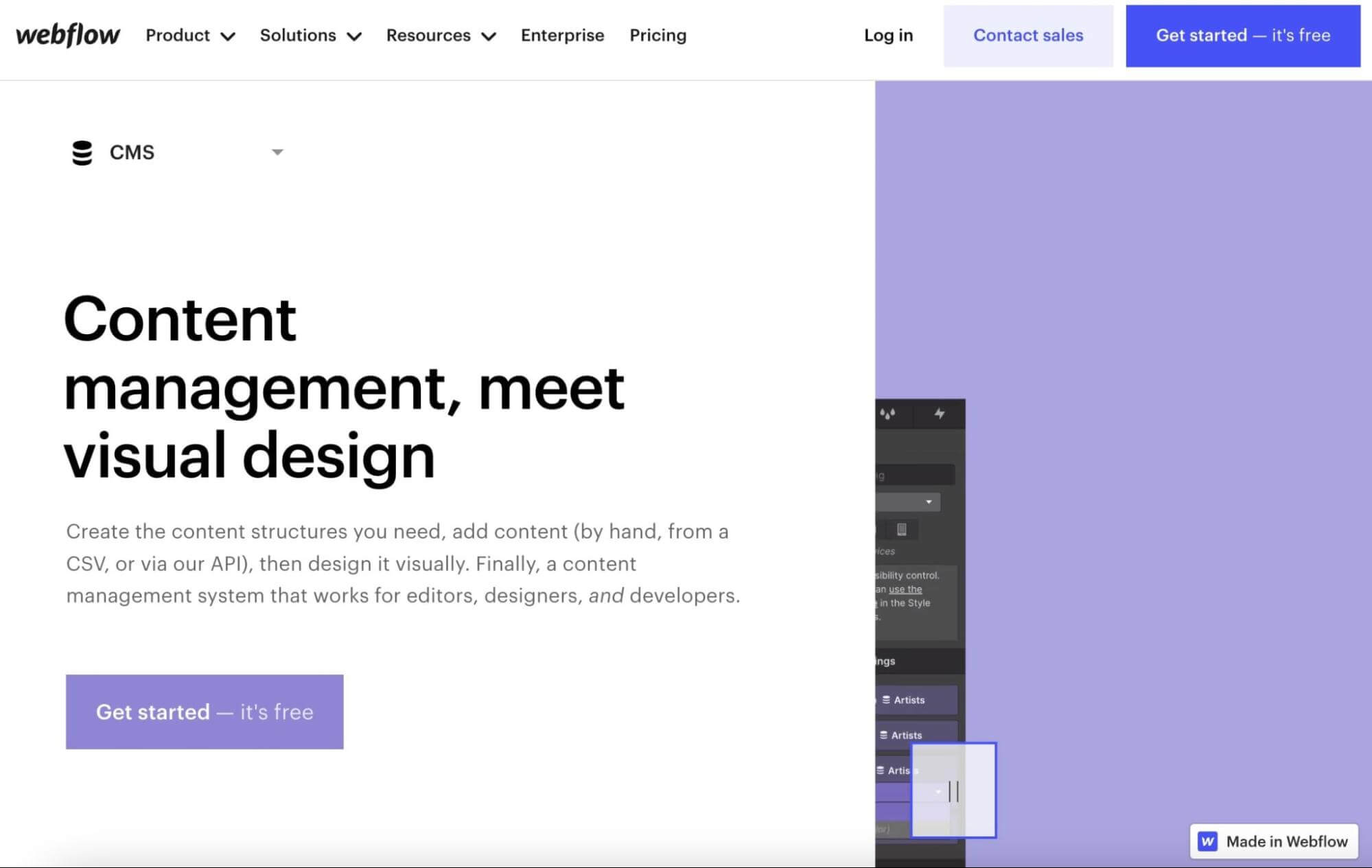
Webflow landing page

What makes this a good product landing page?

  • Webflow introduces its Content Management System (CMS) with a video of different websites built with the software. This is a more interactive element than a simple static portfolio.
  • On this product landing page, Webflow defines its target audience. Customers like designers, editors, or developers can find out how the CMS can improve their workflows.
  • As visitors scroll, the header sticks to the top of the page. This lets potential customers easily sign up or contact the sales team for more information.

29. Elegant Strand
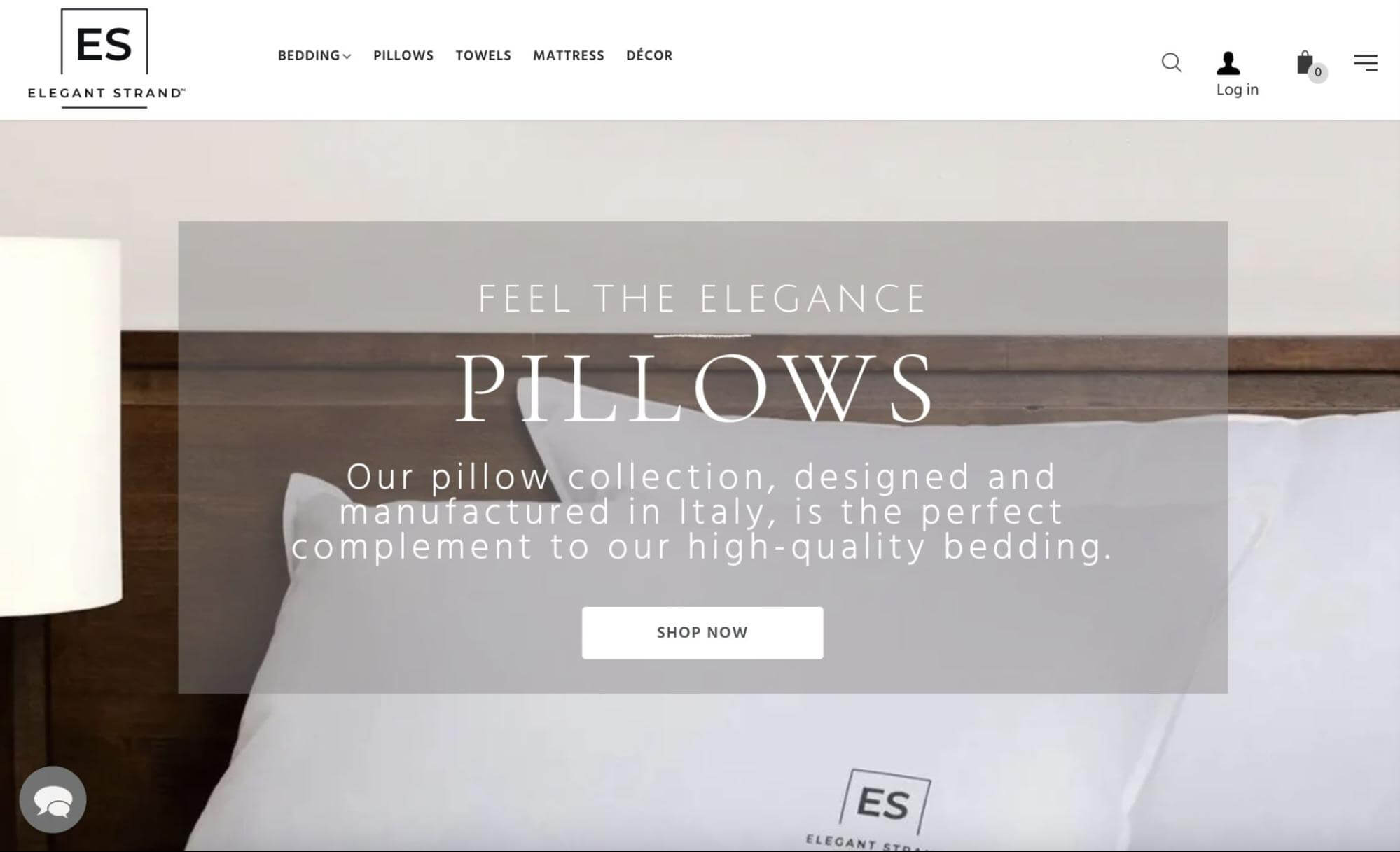
Elegant Strand landing page

What makes this a good product landing page?

  • Elegant Strand sticks to a simple black-and-white color palette to complement its sleeping pillows. This design also makes the landing page more cohesive as a whole.
  • In the product description, the pillows are described as hotel-quality. Adding features like goose-down filling and Italian craftsmanship, the products seem more luxurious and high-end.
  • Although this landing page aims to advertise Elegant Strand pillows, there is also an option to “Complete your bedroom”. By recommending similar products, the company can increase its average order value.

30. Ugmonk
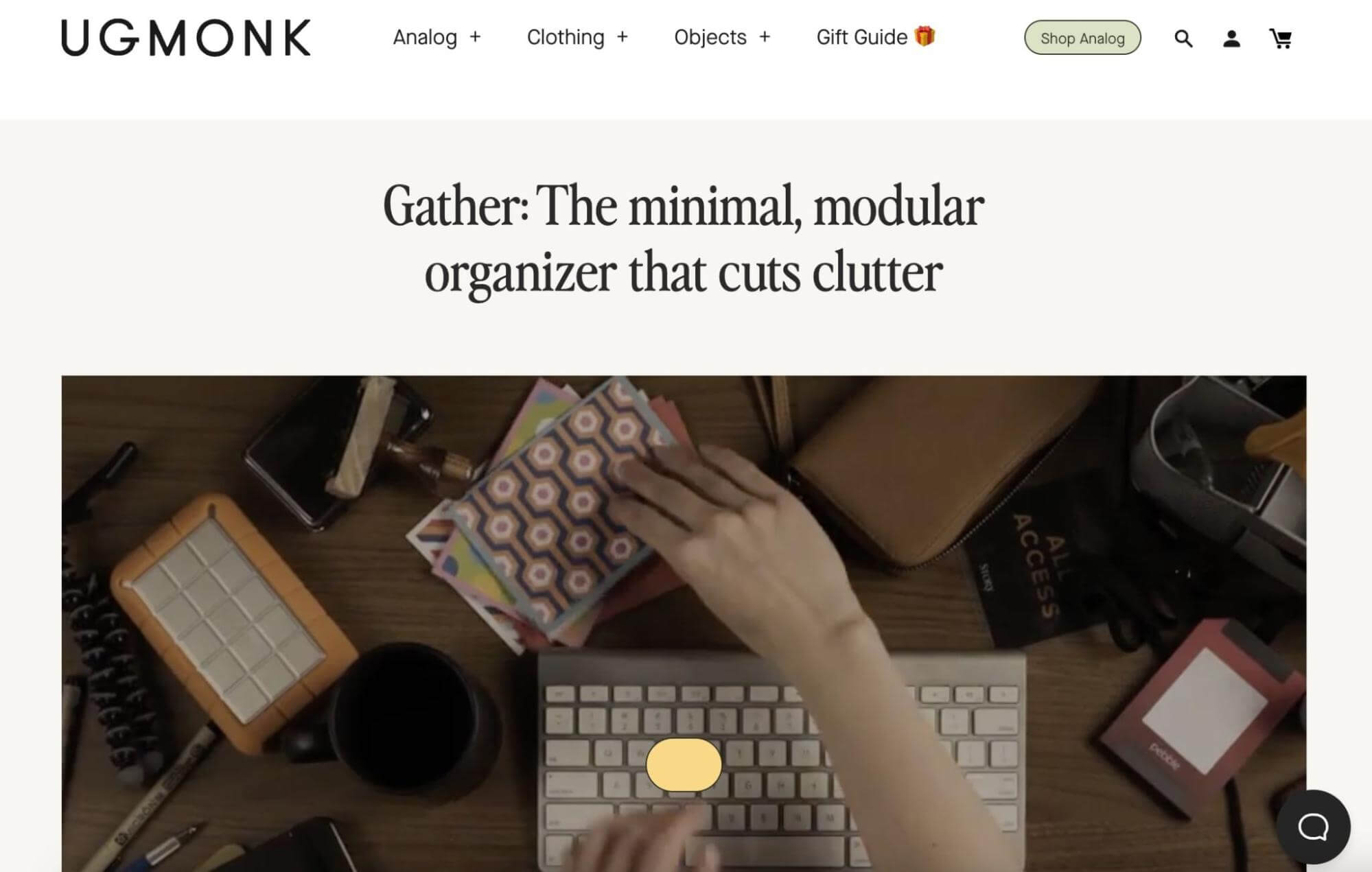
Ugmonk landing page

What makes this a good product landing page?

  • Since Ugmonk created a desk organizer, it makes sense that its product landing page has a minimalistic design. Just like the product, the layout removes any unnecessary clutter.
  • There are many videos of the product in use to advertise its versatility. The clips tell visitors that they can configure the Gather organizer to their unique desk spaces.
  • The action statement “Win the battle against clutter” is placed right next to the shop buttons. This element prompts visitors to take control of their desks by purchasing the organizer.
  • Unlike other product landing pages, Ugmonk also links to blog posts. Before purchasing the product, potential customers can read about the company’s history.

Create Impressive Product Landing Pages

After developing products or services for your business, you’ll want to create custom landing pages for them. A product landing page will summarize the main features and benefits of your items to new visitors. With the right design, these pages can increase your conversion rate.

For your landing page, you might create aesthetic graphics similar to Apple Airpods Max. Alternatively, you may be inspired by Draggable’s engaging animations. Regardless of your niche, you’ll be able to create a well-designed landing page that aligns with your brand, tone, and target customer.

Once you design your first product landing page, you may not know how to advertise it. At DreamHost, we provide professional marketing services to help you expand your reach and gain new customers!

DreamHost Makes Web Design Easy

Our designers can create a gorgeous website from SCRATCH to perfectly match your brand and vision — all coded with WordPress so you can manage your content going forward.

custom website design

The post 30 Excellent Product Landing Pages Guaranteed to Inspire You appeared first on Website Guides, Tips & Knowledge.


source https://www.dreamhost.com/blog/product-landing-page-design/

Thursday, 12 January 2023

How to Fix: 400 Bad Request Error

As you’re browsing the web, you may stumble across an invalid page. Sometimes, a site’s server won’t be able to understand your request for its content. Instead of the requested resources, you’ll see a “400 Bad Request” error message.

Fortunately, the 400 Bad Request issue is easy to resolve. Often, fixing typos in the URL will do the trick, but you may also need to clear your browser cache or temporarily disable extensions.

In this post, we’ll explain what the 400 Bad Request error is and what causes it. Then, we’ll look at six different ways to fix it. Let’s get started!

An Introduction to the 400 Bad Request Error

When you try to access a web page, your browser requests the site’s data from its server. The web server will then process the request. Within the HTTP header, there will be a status code explaining whether the request was successful or not.

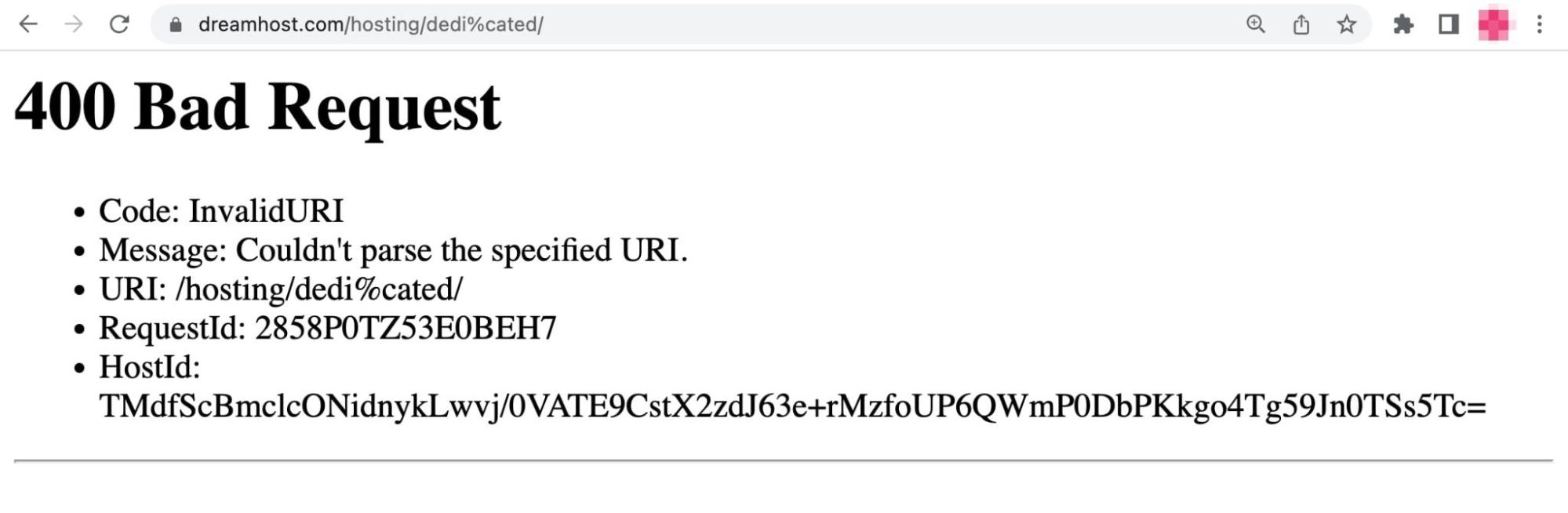
In a successful HTTP request, you won’t see the status code. However, sometimes your web browser may display an error message like “400 Bad Request”:

400 Bad Request error

This 400-level HTTP status code indicates that there was a client-side error in the request. As a result, you won’t be able to view the page you requested.

While this error typically shows up as “400 Bad Request”, you may see some variations:

  • Bad Request – Invalid URL
  • HTTP Error 400
  • HTTP Error 400 – Bad Request
  • HTTP Status 400 – Bad Request
  • 400 – Bad Request. The request could not be understood by the server due to malformed syntax. The client should not repeat the request without modifications.
  • Bad Request. Your browser sent a request that this server could not understand.
  • 400 Bad Request. Request Header Or Cookie Too Large
  • Bad Request – Error 400

The 400 Bad Request error can be very frustrating, as it blocks access to the site without giving you any helpful information. Let’s discuss some of the most common causes.

Potential Causes for the 400 Bad Request Error

When a server returns a 400 Bad Request, it means that it cannot understand and process your request. Usually, this is due to a client-side error, which means there’s a problem on your end.

Here are some common issues that may cause a 400 Bad Request error:

  • Invalid URL syntax: You may have mistyped the URL or used invalid characters.
  • Corrupted browser cache or cookies: If your browser cookies have expired or your cache is corrupted, the server may not be able to process your request properly.
  • Conflicting browser extensions: In some cases, your browser extensions can interfere with the request and cause a 400 Bad Request.
  • Bad DNS cache: Your locally cached DNS data could be out of sync with the current DNS registration for the domain.
  • Large uploaded file size: If you’re uploading a large file to a site, it could exceed the maximum upload limit.

Alternatively, a 400 HTTP error could appear due to a server-side error. For example, the website may have a misconfigured server or a temporary glitch.

How to Fix the 400 Bad Request Error (6 Methods)

When you see a 400 Bad Request error, you can try refreshing the page. In some cases, this will resolve any temporary glitches. If it doesn’t work, you can try the following steps.

1. Check for Errors in the Address

First, you’ll want to check your URL for any errors. This is one of the most common causes of a 400 Bad Request.

There could be typos, malformed syntax, or extra characters in the address. It’s important to go back to the domain name, directory path, and query string to make sure the address is correct.

During this process, check for special symbols. For example, random characters like hyphens (-) or percentages (%) could cause the Bad Request:

Invalid URL

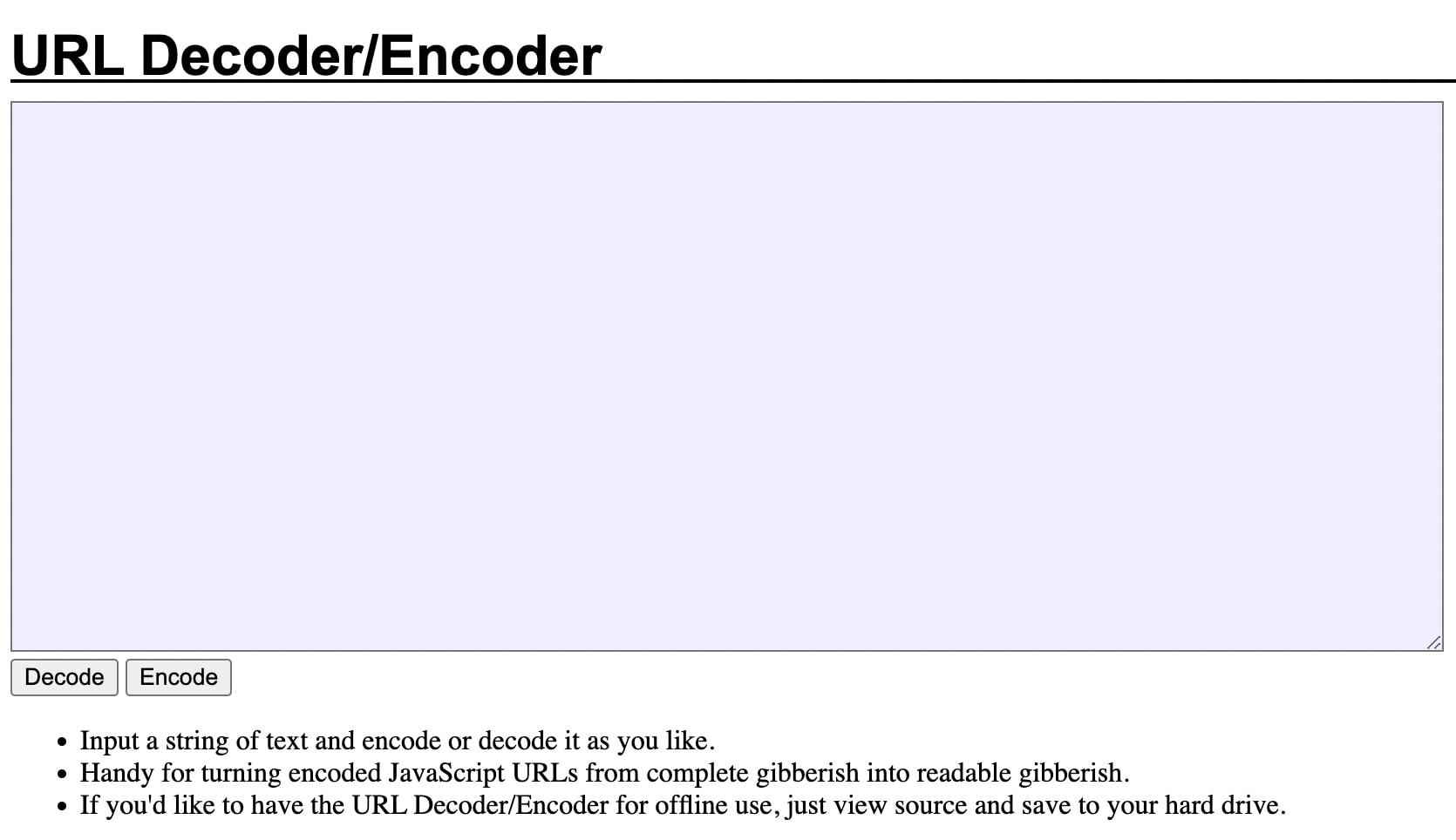
Some URLs have special characters, but you’ll need to make sure they’ve been coded correctly. You can check the address using a URL Decoder/Encoder. This tool will identify any invalid characters in the URL:

URL decoder

Then, try searching for the URL again. If the same 400 error pops up, you can also try searching for the web page in a different way.

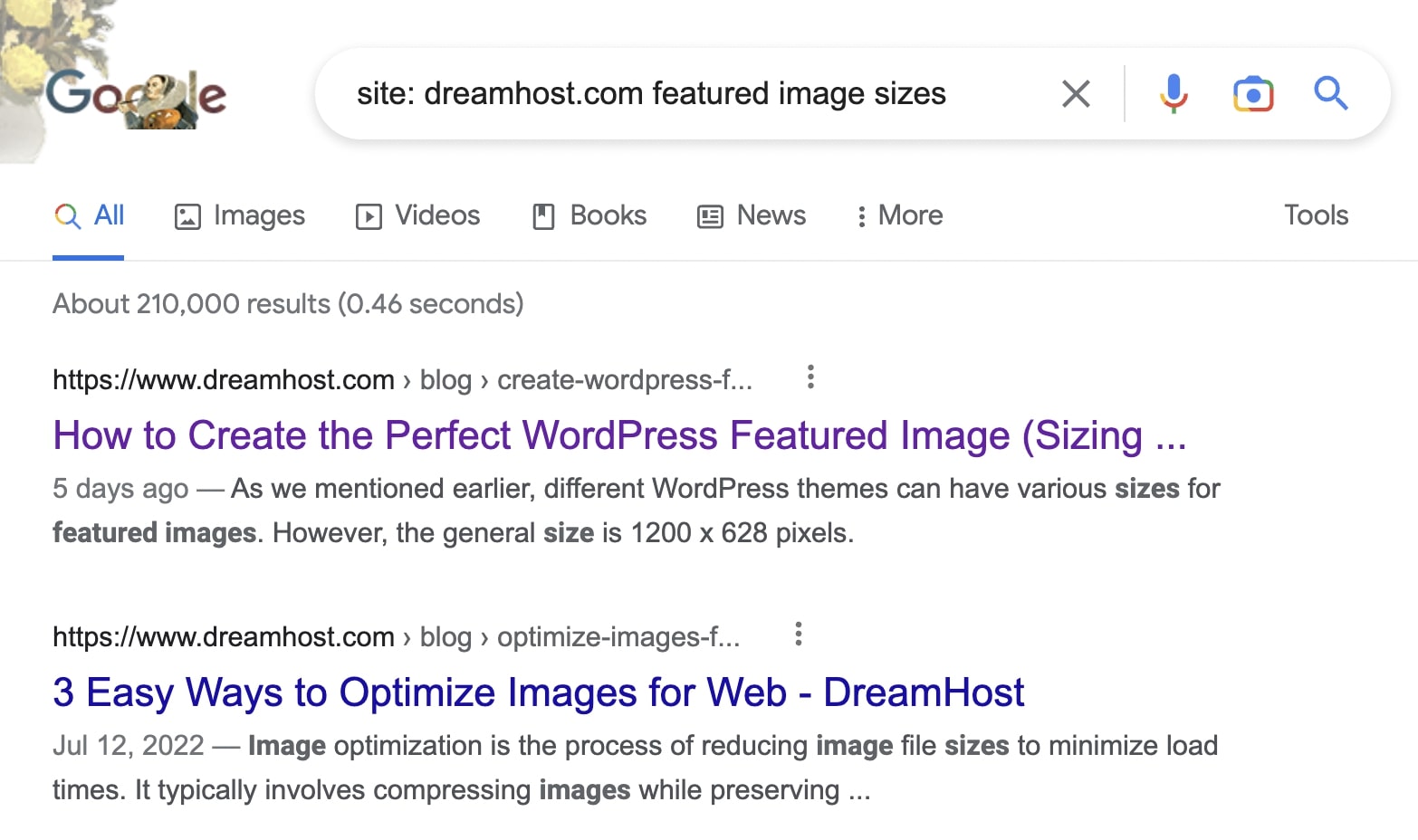
For example, you can run a search for the site’s domain name and a relevant keyword. If you were looking for our post on featured image sizes, you would type ‘site: dreamhost.com featured image sizes’ into a search engine:

Search for page keyword

This will enable you to access the page without having to type the URL manually. However, you may still get a 400 Bad Request error. If this happens, continue to the following method.

2. Clear Your Browser’s Cache and Cookies

Your browser saves site data in a cache. This way, when you revisit that site in the future, the browser will serve the cached content to make the page load faster.

As you’re browsing the Internet, cookies will also be stored in your browser. These are small files that contain data such as the length of your browsing session. Cookies can also remember personalized information like your login details or site preferences.

Although your browser’s cache and cookies can be helpful tools, they can also become corrupted. Additionally, cookies can eventually expire. When this happens, it can trigger a 400 Bad Request.

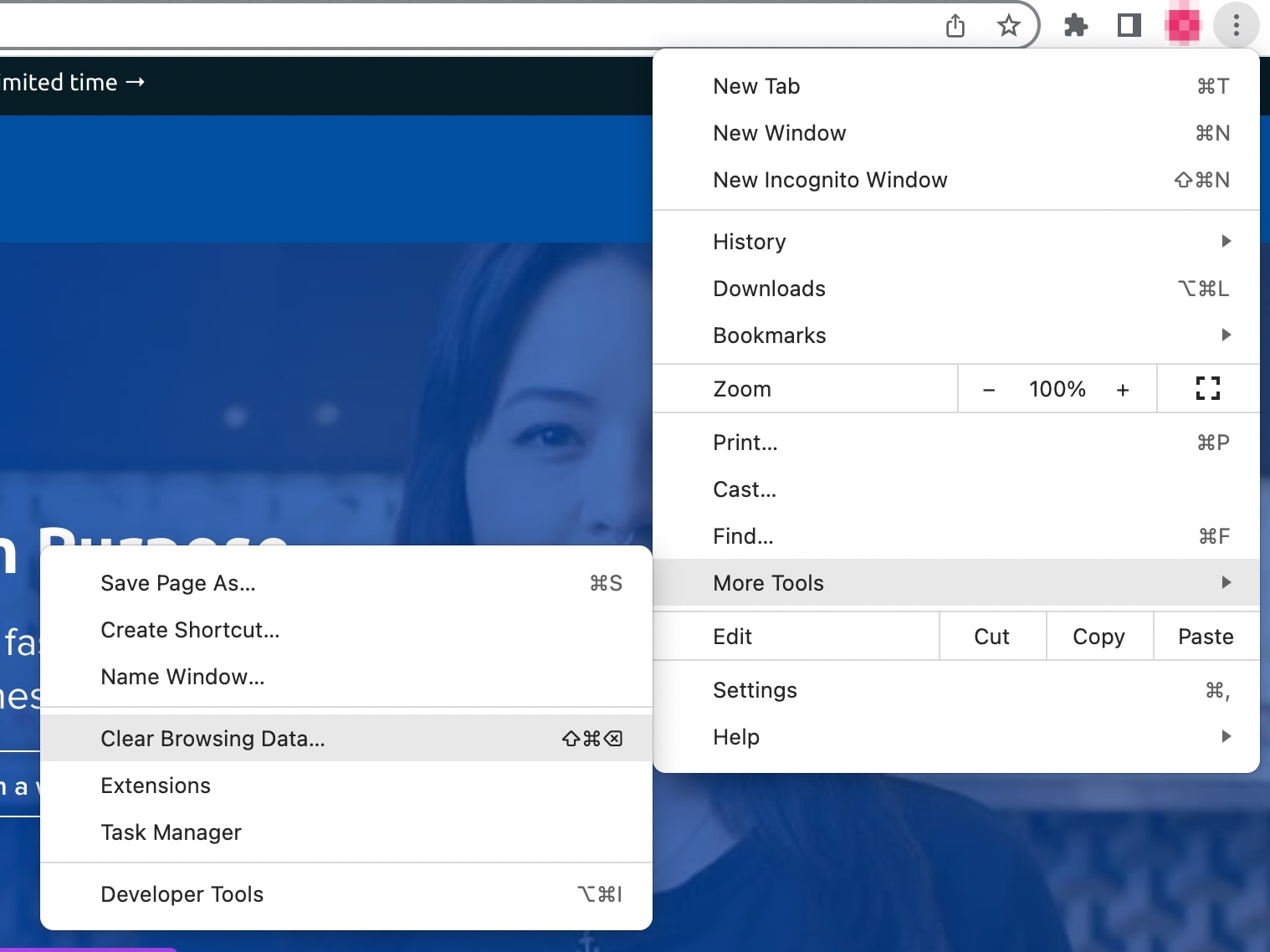
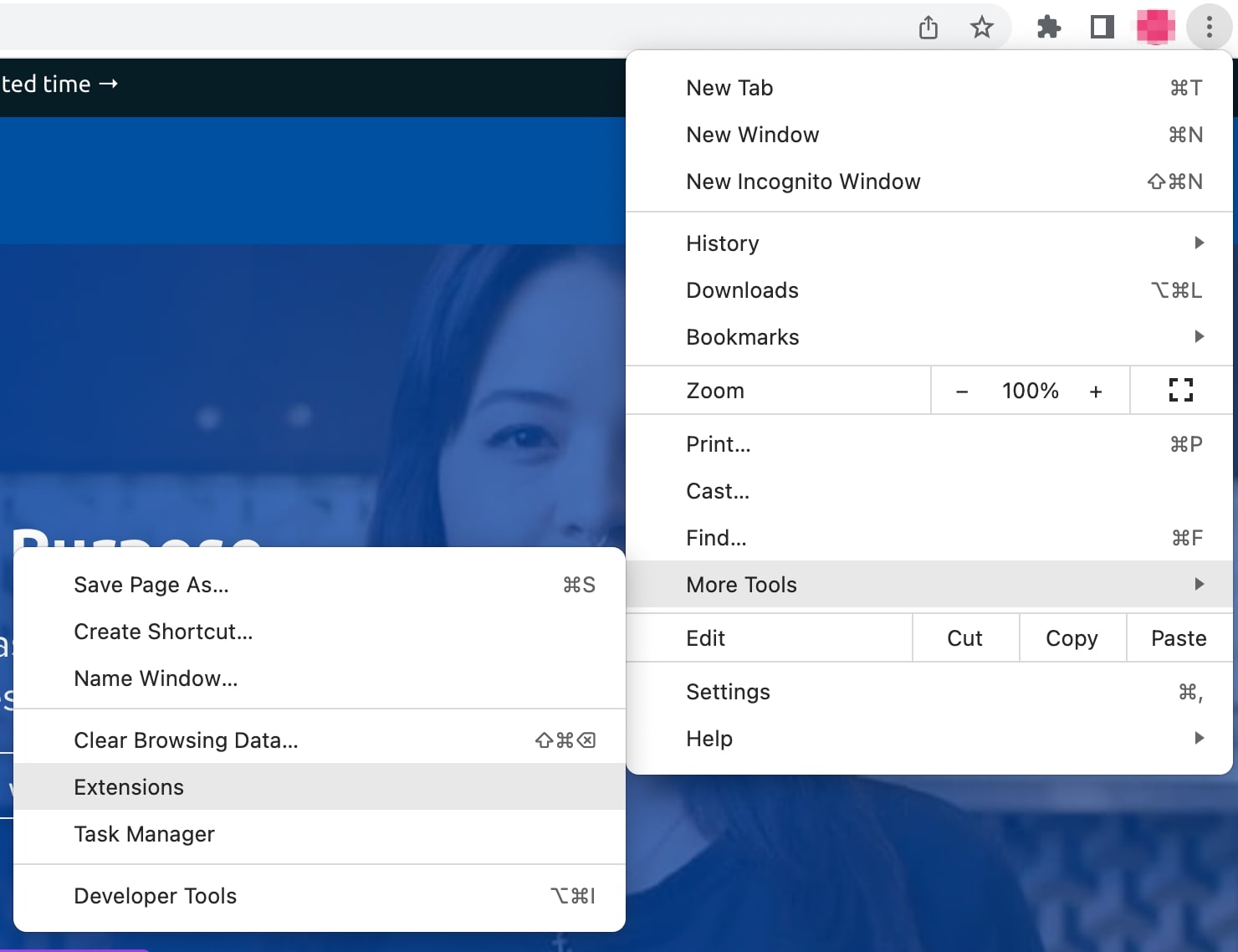
To solve this problem, consider clearing the cache and cookies in your browser. In Google Chrome, you’ll need to hit the three-dot icon in the upper right-hand corner. Then, select More Tools > Clear Browsing Data:

Clear Chrome browsing data

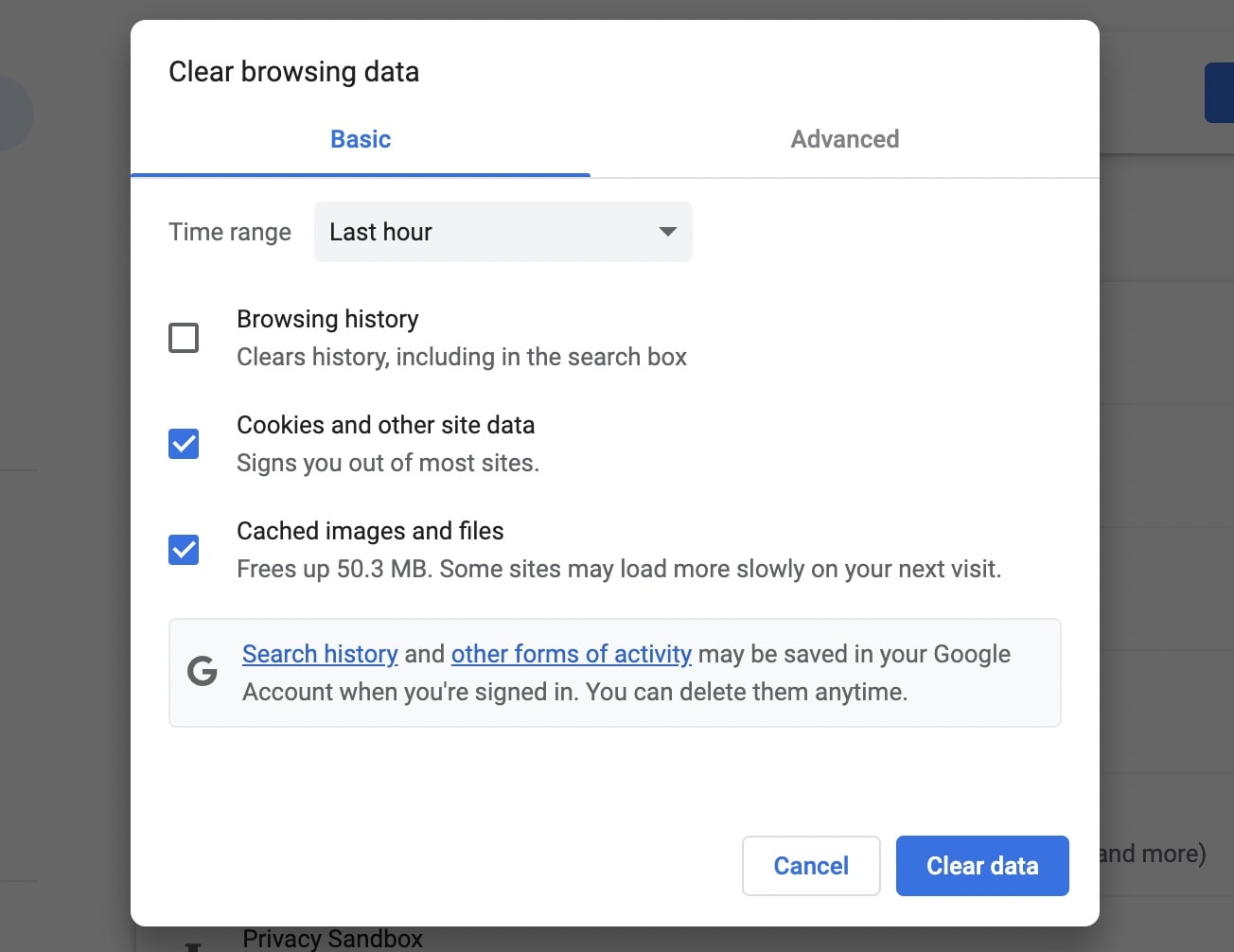
This will open a pop-up window where you can choose the data you want to clear. Make sure to select Cookies and other site data as well as Cached images and files:

Clear cookies and cache

If the Bad Request error happens on a different device or browser type, this process will look a little different. If you use an iPhone or Microsoft computer, you’ll have to review the company’s knowledge base for clearing your specific cache, cookies, or browsing data.

Keep in mind that this will sign you out of many websites. You may also experience slower loading times when you visit these sites again. However, it could remove corrupted or expired data that may cause a 400 Bad Request.

3. Disable Browser Extensions

If you’re a website owner, you likely know that third-party plugins can cause many WordPress errors. Similarly, the software in your browser extensions could interfere with your request.

To get started, try disabling your extensions. If you’re using Google Chrome, click on the three dots again and navigate to More Tools > Extensions:

Disable Chrome extensions

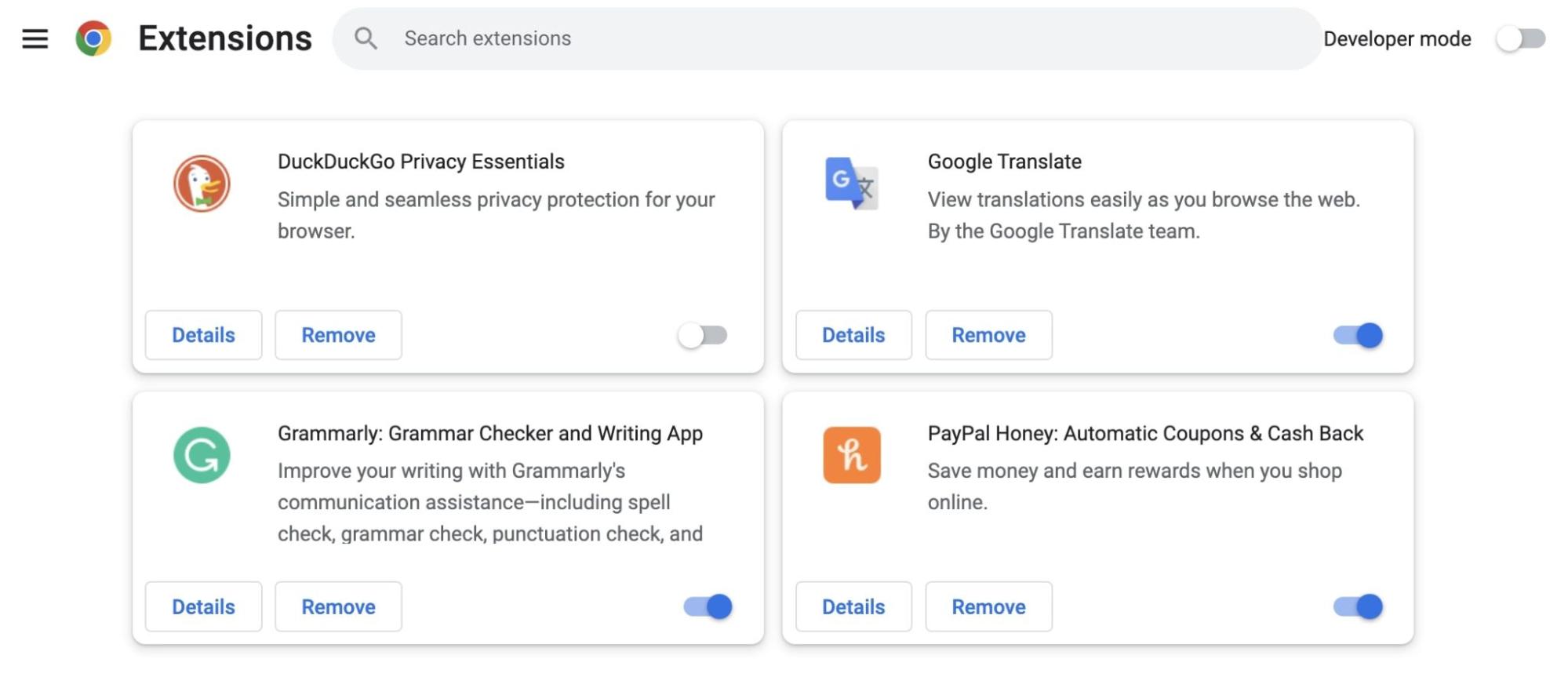
This will take you to a page where you can manage your Chrome extensions. Using the toggle switches, turn all of them off:

Chrome extensions

Now, reload the page that triggered a Bad Request. If it loads successfully, then one of these extensions caused the error.

To find the problematic extension, reactivate them one by one, each time checking to see if the error has returned. Once it does, remove the extension that caused it. This should prevent any 400 HTTP status codes in the future.

4. Flush the DNS Cache

The first time you visit a website, some of its data is stored locally in a cache. To load pages faster, your computer will save DNS information about websites. This will eliminate the need to search for the site’s nameserver and IP address every time you come back.

Just like your browser cache, the DNS cache can also become corrupt or outdated. Sometimes, a website will update its DNS information. If this conflicts with your cached data, it can lead to a 400 Bad Request error.

To fix this error, you’ll need to flush your DNS cache. For macOS operating systems running on Monterey and Big Sur, open the Terminal and enter this command:

sudo dscacheutil -flushcache; sudo killall -HUP mDNSResponder

If you have Windows 10, open the Command Prompt and type in the following command:

ipconfig /flushdns

With Linux operating systems, you’ll use Terminal as your command line. To flush the DNS, simply execute this command:

sudo systemd-resolve --flush-caches

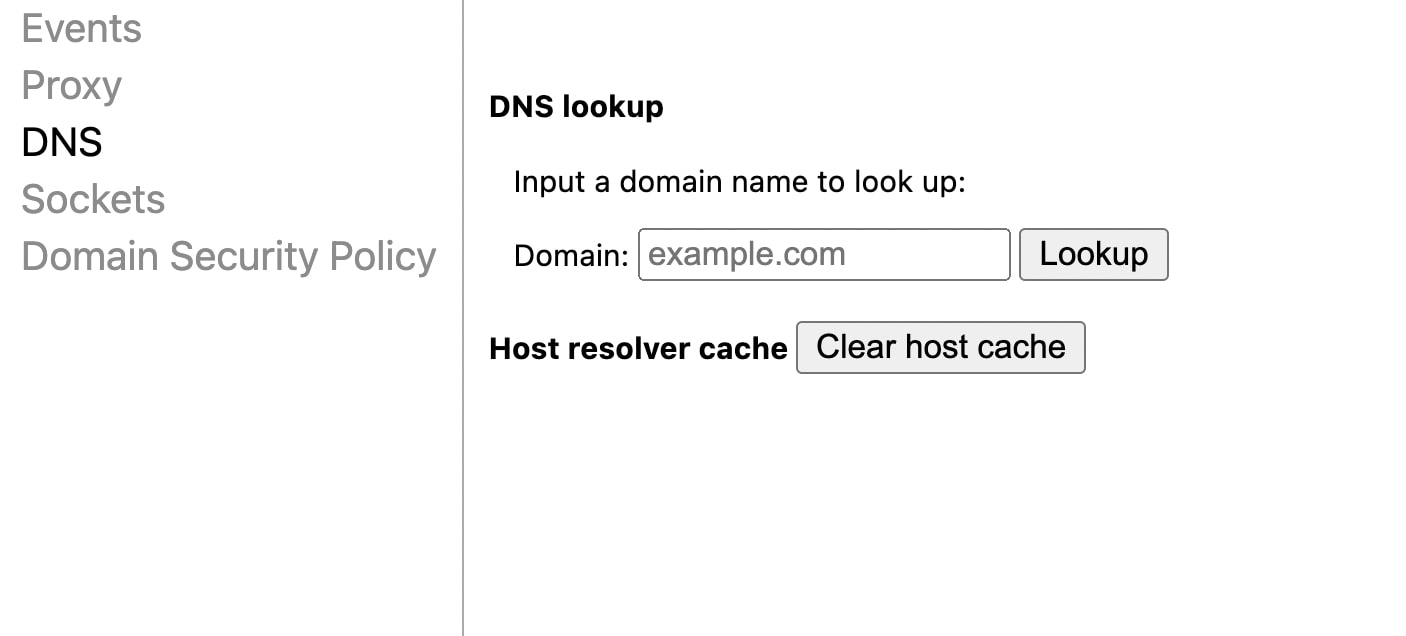
You may also need to flush the DNS cache for your browser. To do this in Google Chrome, paste the following line into your search bar:

chrome://net-internals/#dns

Then, click on Clear host cache. This will flush your browser’s DNS cache:

Clear browser DNS

After you successfully flush your DNS, check to see if this resolved the error. If not, you’ll need to try another method.

5. Check the Uploaded File Size

Sometimes, you’ll see the 400 Bad Request error right after uploading a file to a website. In this case, your file may be too big to upload to the site’s server.

Every site has a maximum file upload size. Although this is set by the hosting provider, it usually falls between 2 and 500 MB. If you upload a larger file, you’ll likely receive a Bad Request.

To see if this is the case, start by uploading a smaller file. If this is successful, you’ll need to resize or compress the original file.

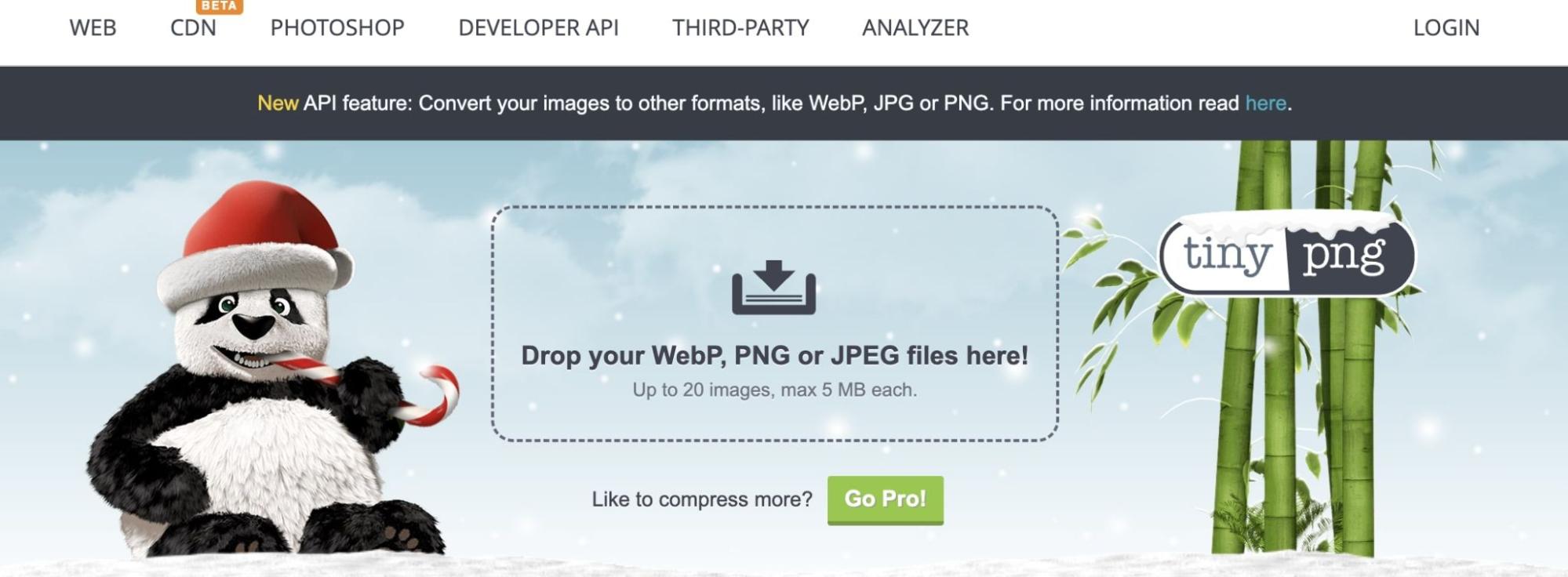
You can use a tool like TinyPNG to reduce file sizes:

TinyPNG website

If allowed by the site, you can also try uploading a zip file. Ultimately, you’ll want to reduce file sizes enough to stay within the server’s file size upload limit.

6. Troubleshoot Your Device and Internet Connection

When every single page you visit returns a 400 Bad Request, you might have a poor Internet connection. To see if this is the case, try switching to a different network. For example, you can turn off Wi-Fi for your mobile device and use cellular data.

If this resolves the error, you can troubleshoot your Internet connection. You may need to restart your Wi-Fi router. Alternatively, consider contacting your service provider to fix the issue.

You can also try turning your device off and back on again. Since this can clear Random Access Memory (RAM), flush temporary caches, and close running programs, it may help solve a Bad Request.

Error-Free Browsing

The 400 Bad Request error is a client-side HTTP status code that crops up when a server is unable to fulfill a request. This is usually caused by typos in the URL, corrupt browser cookies, or conflicting browser extensions.

Fortunately, there are many ways to resolve the issue. One simple solution is to reload the browser and check for temporary glitches. However, you may need to flush your DNS cache, restart your device, or reduce uploaded file sizes.

For more error troubleshooting tips, subscribe to the DreamHost blog! We’ll update you every time we post new content.

Get Content Delivered Straight to Your Inbox

Subscribe to our blog and receive great content just like this delivered straight to your inbox.

The post How to Fix: 400 Bad Request Error appeared first on Website Guides, Tips & Knowledge.


source https://www.dreamhost.com/blog/400-bad-request-error/

Wednesday, 11 January 2023

How to Create an Eye-Catching Photography Portfolio Website (In 4 Steps)

Photography is a popular and engaging hobby, especially with the variety and convenience of advanced camera options. Whether you’re into dark rooms and film or high-end digital lenses, turning your photography hobby into an online business might be on your radar.

That’s where WordPress and the time-saving functionality of website builders come in. When you combine the content management options of WordPress with drag-and-drop site design capability, it’s easy to turn your big ideas into a professional photography site.

This article will cover four steps for creating a photography website with WordPress. So take that lens cap off your camera, friend, and let’s get started!

Why You Should Consider Starting a Photography Portfolio Website

As a photographer, it’s worth sharing your work online on a portfolio website. This site will serve as a collection of your different photos in one place, advertising your skills to a wide range of users.

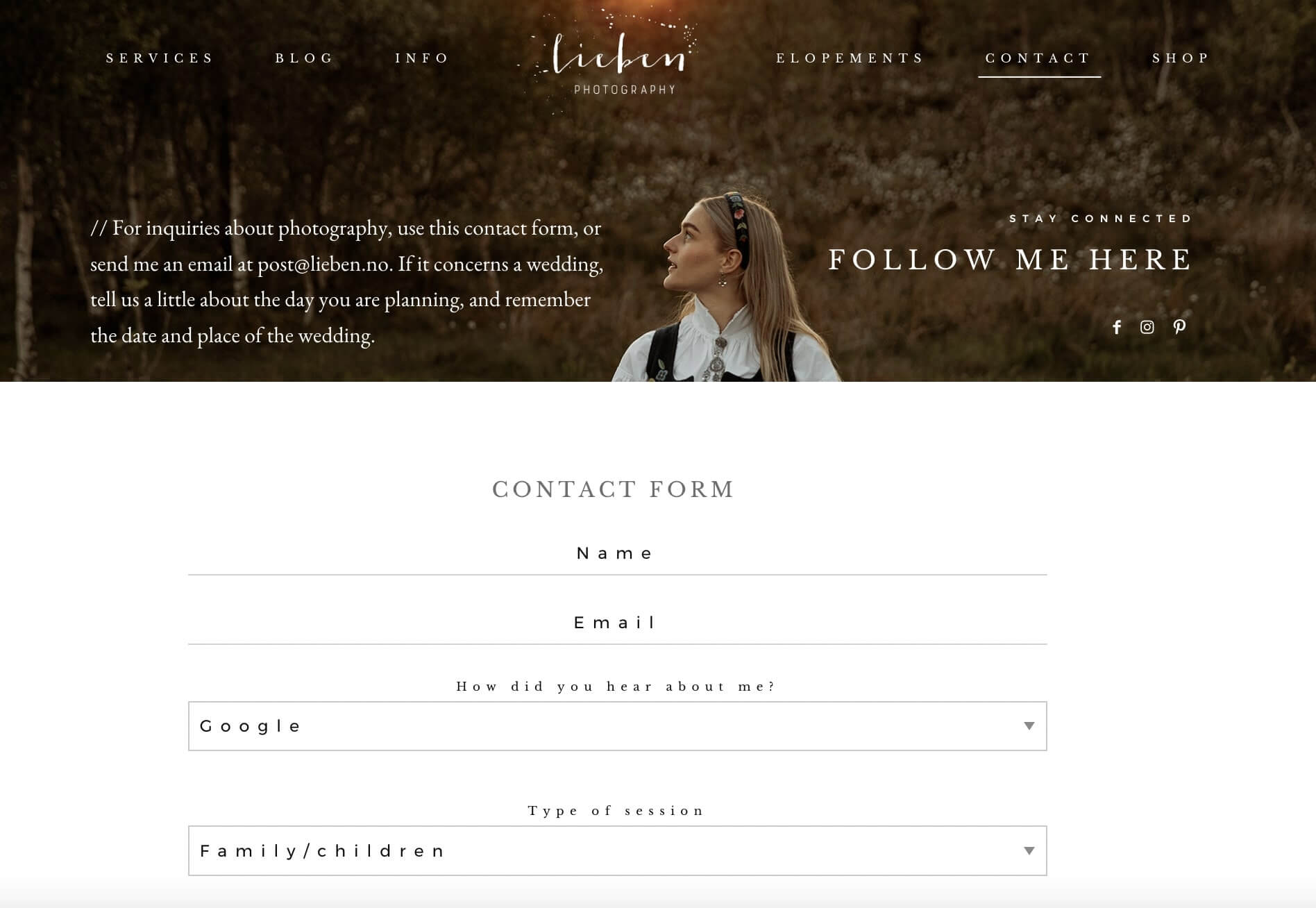
Although you may be tempted to use social media to build your photography business, it can help to have a dedicated website for your brand. Along with showcasing your beautiful images, you’ll be able to add a contact form. This is an easy way for prospective clients to get in touch:

Photography website contact form

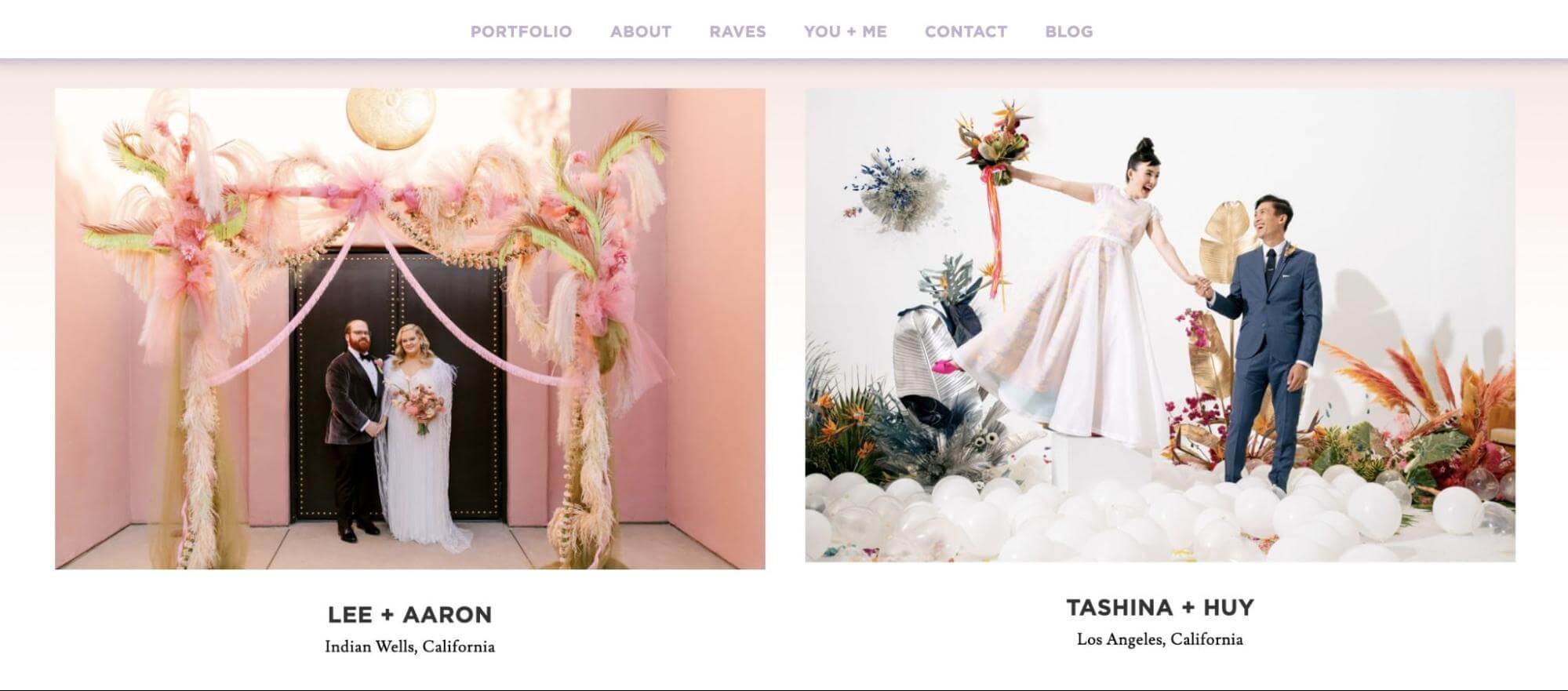
Plus, you can organize your website into different galleries. For example, wedding photographers might want to add photo collections for specific couples:

Photography portfolio galleries

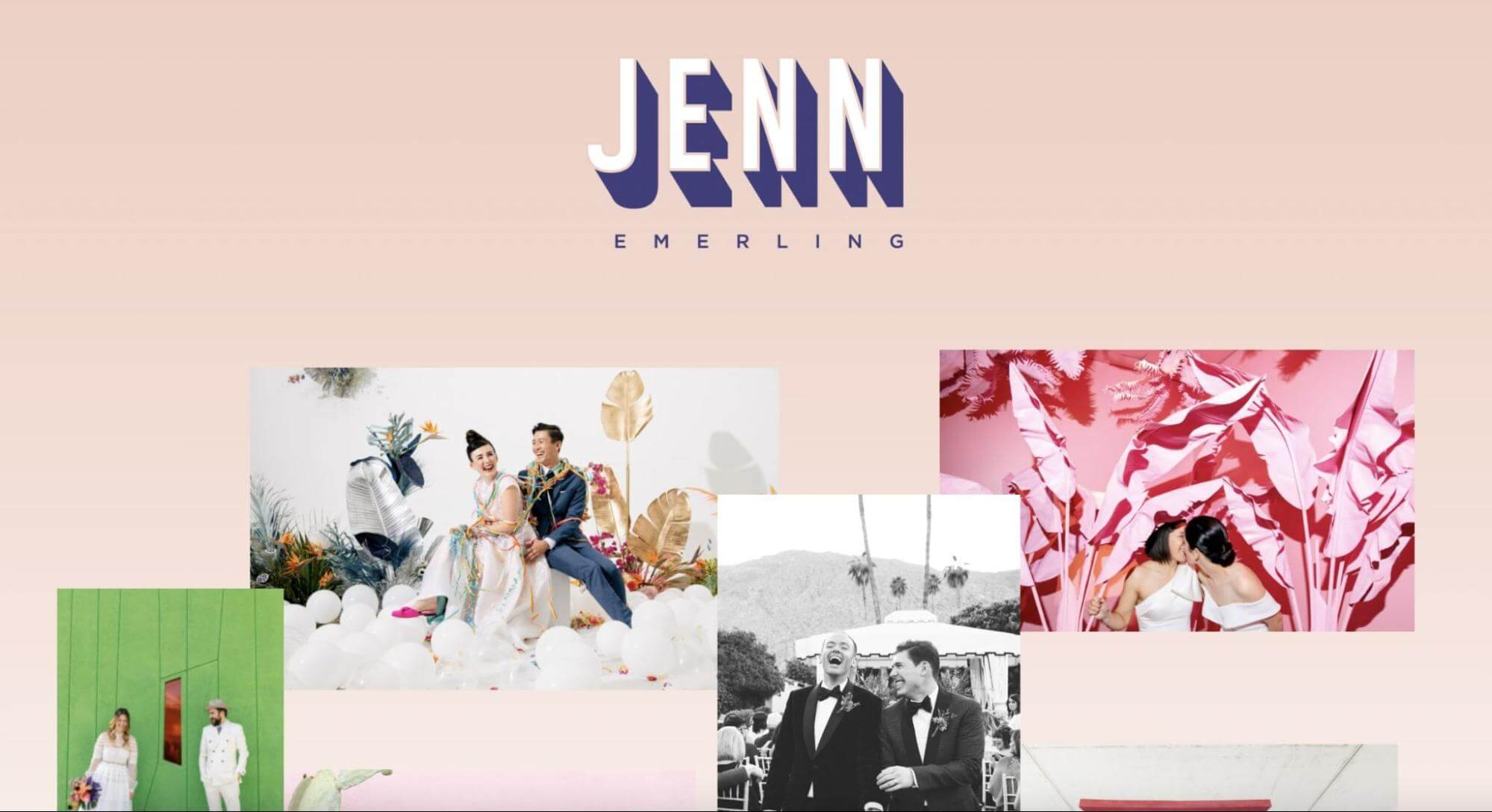
A website can also be a great place to showcase your personal style. If your work is colorful and bright, you could display the same qualities in your graphic design. A well-designed landing page can even increase leads and conversions:

Photography portfolio landing page

Without a website, you may struggle to connect with new clients. Ultimately, it’ll be more difficult to advertise and distribute your services. Therefore, when you’re ready to grow your business, you’ll want to create an online portfolio.

3 Tips for Building Your Photography Portfolio Website

Building a site can be a daunting task. To help you get started, here are a few tips to create the best photography portfolio website!

1. Stick to Your Brand

One of the first steps in designing a photography website is determining your style or niche. Whatever your focus might be, knowing it ahead of time will help you create your site and target your specific audience. With this in mind, take a few minutes to set some goals for your site and then write them down.

Since there are many photographers, you’ll want your website to have some personality. By defining your brand niche, you can tell visitors why you’re the best option for their needs.

For example, Jenn Emerling is a professional photographer specializing in destination weddings. Instead of being a standard, run-of-the-mill wedding photographer, she defines herself as an “artist who happens to shoot weddings”:

Jenn Emerling photography portfolio website

Her vibrant, multi-colored website, powered by WordPress and DreamHost, has proven to be a huge success. By focusing on her unique approach, Jenn was able to attract dream clients while reflecting her authentic artistic voice.

2. Highlight Your Best Work

When creating an online portfolio, your photos should be the center of attention. Since you’re a unique photographer, your website will also have a custom layout and web design. However, make sure that this structure properly highlights your work.

At the very least, you should have a dedicated page for your portfolio. Although you may be tempted to include hundreds of photos for prospective clients to browse, it’s better to showcase 10-20 of your best pieces.

If you’re having trouble narrowing down your work, consider diversifying your portfolio. You’ll want visitors to immediately understand your main niche without displaying the same type of photo over and over. Alternatively, you can also browse competitors’ portfolios to see their images, as well as any holes that you can fill.

3. Use the Right Content Management System

Although options like Adobe Portfolio are designed explicitly for creating portfolio websites, we’d recommend a more versatile platform.

Since it powers over 30% of all websites, WordPress is the most popular Content Management System (CMS). It is a flexible software that can give anyone full control over their online presence:

WordPress website

Outside of those numbers, WordPress’s practical, open-source software is another reason we suggest it for a photography portfolio website. You can find thousands of free themes and plugins in its directories to extend your site. Whether you need to build an image gallery or contact form, WordPress can help you create a truly unique website for your photography business.

One more plus? WordPress software is free. You can afford to run a self-hosted website even as a brand-new photographer.

Get Content Delivered Straight to Your Inbox

Subscribe to our blog and receive great content just like this delivered straight to your inbox.

How to Create an Eye-Catching Photography Portfolio Website (In 4 Steps)

Once you’ve defined your niche and collected some of your best photographs, it’s time to build your website. Fortunately, we’re here to guide you through setting up and designing a site with WordPress!

Step 1: Choose Your Domain Name and Web Host

No matter what website you build, a good first step is finding a hosting provider. Essentially, web hosts give you the server space and resources you need to store and grow your site online.

Although choosing a web host might seem overwhelming at first, there are a few features you can look for:

  • Storage: If you plan on using the same host for your website and photos, you’ll want to investigate the amount of available storage. There may even be additional storage as an add-on to handle your larger, high-quality images.
  • Software: You’ll also want to consider whether you need a one-click solution to get started with WordPress. This is an excellent option for beginners who don’t want to hire a developer.
  • Support: The last thing you want is for your clients to be unable to access your site while trying to view your photos. Make sure your web host has 24/7 support and provides a downtime guarantee. You’ll also want to read up on its site backup and restoration options in case something happens.
  • Extras: Some hosts come with extra features you might want to consider. These include premium themes, plugins, staging sites, or website builders that can streamline your design process.

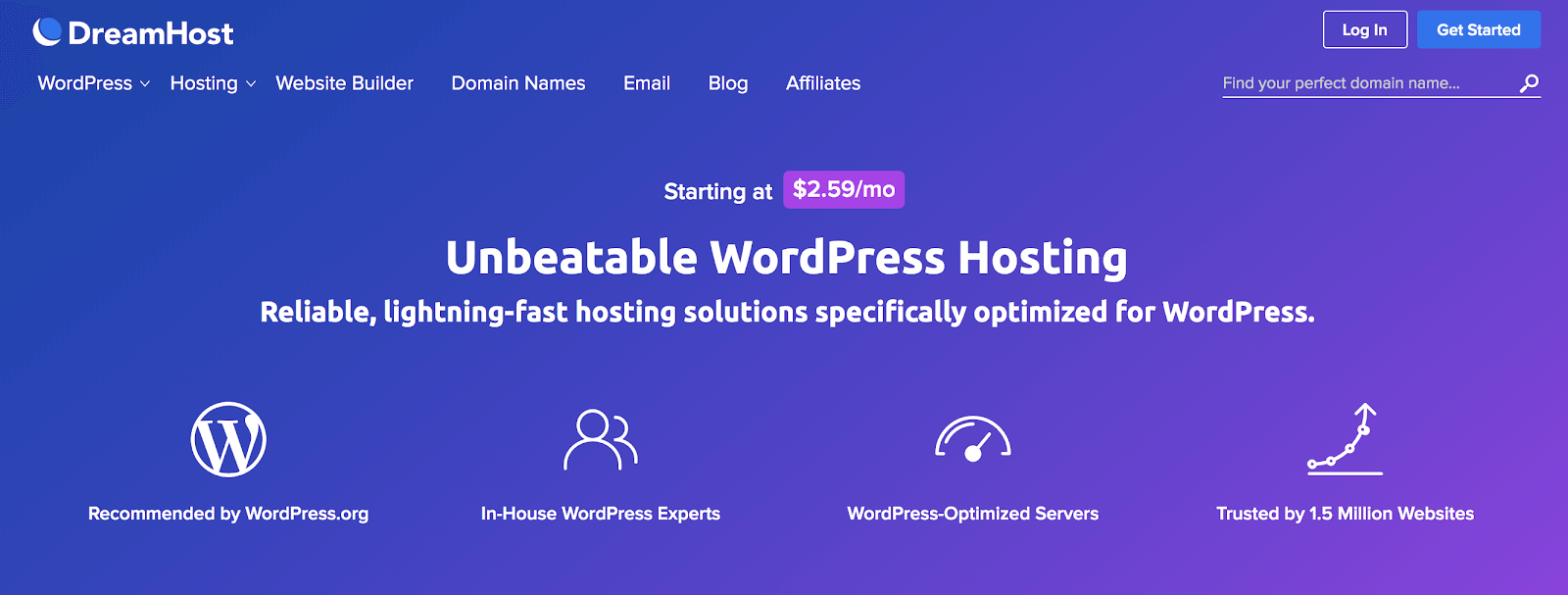
No matter what type of hosting you ultimately decide you need, here at DreamHost, we offer a wide range of WordPress plans. Each package comes with a free SSL certificate, automated backups, and a free domain name. Plus, we’ll automatically install WordPress for you:

DreamHost WordPress hosting

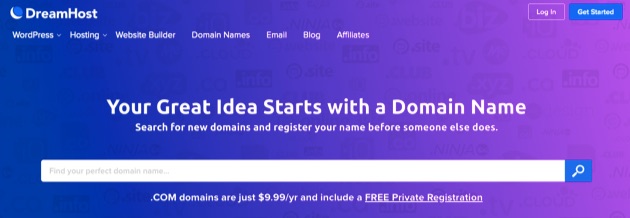
Once you’ve signed up for a hosting plan, you’ll be able to register a domain name. This is the web address that potential clients will use to find your portfolio:

DreamHost domain name registration

Most photographers choose to include their full names within their domain. Alternatively, you can incorporate target keywords for your niche if your name is already taken. For example, Jenn Emerling is a wedding photographer, so her URL is ‘jennemerlingweddings.com’.

Step 2: Install a Dedicated Photography Theme

Installing a theme enables you to customize the look of your WordPress site. What’s more, it’s as easy as uploading a file or clicking a button. There are a lot of photography themes out there, however, so deciding which one is best for you might be the hardest part.

If you’re using DreamHost as your WordPress hosting service, you’ll have access to our Website Builder. As a photographer, you can drag and drop elements in a front-end view of your website. In addition, you’ll be able to choose from photography-specific custom templates and view your changes live as you make them.

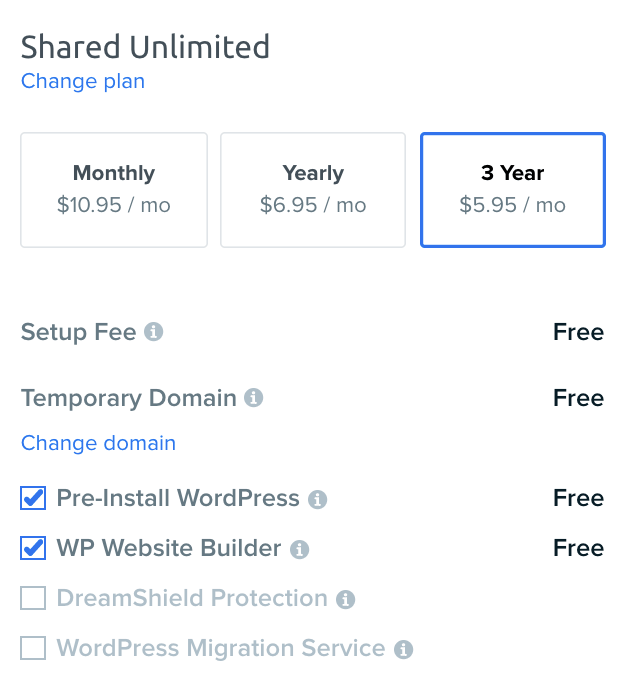
Getting started is easy. You simply need to select “WP Website Builder” as an option when purchasing your DreamHost plan:

Enable DreamHost Website Builder

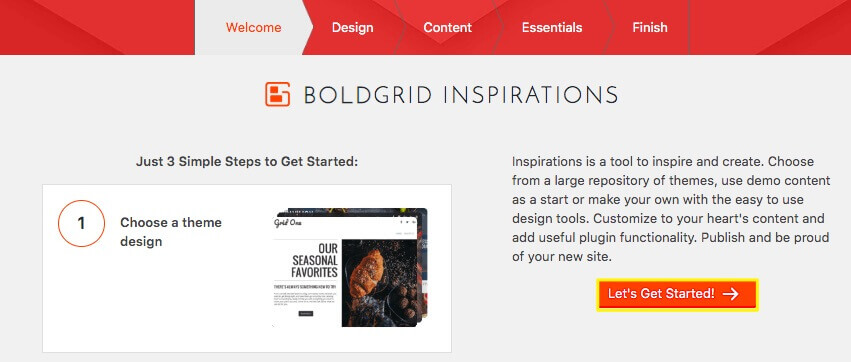
Once you’ve completed your purchase with the website builder selected, sign in to WordPress. You’ll see a new Inspirations tab once you visit your dashboard. This will take you to a setup page:

DreamHost website builder

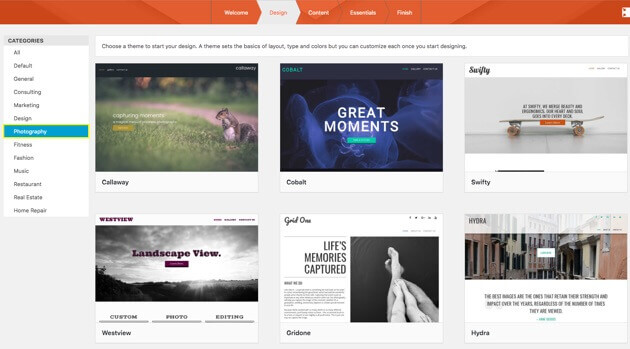
Next, you’ll be able to choose from a menu of theme categories. Our website builder contains many photography themes designed to showcase your skills:

WordPress photography themes

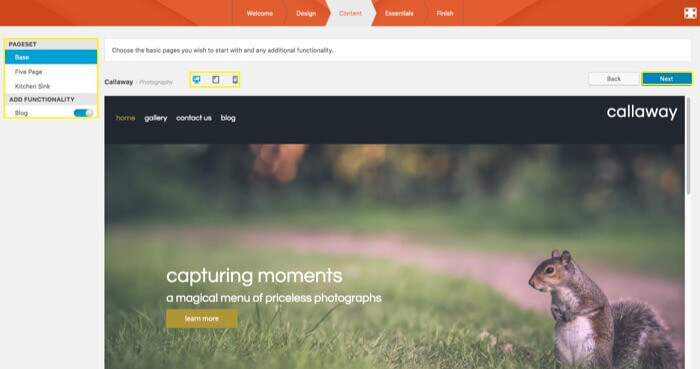
Once you’ve selected the theme you want, you’ll be guided through choosing some custom content options. You can use preset page layouts and menus. You’ll also be able to test your theme’s responsiveness on mobile devices:

Edit WordPress theme

You might notice additional content in your WordPress dashboard now as well. There are some tutorial videos, for example, in case you need extra support along the way. Plus, if you want to spice things up later and change your theme, the Inspirations menu will lead you through that process.

Step 3: Select Plugins to Enhance Your Site

Now that you’ve selected a theme, it’s time to install some plugins. WordPress plugins are add-on packages of code that can enhance and extend the platform’s functionality. You’ll want to familiarize yourself with the best way to manage them to ensure you keep your site safe and secure.

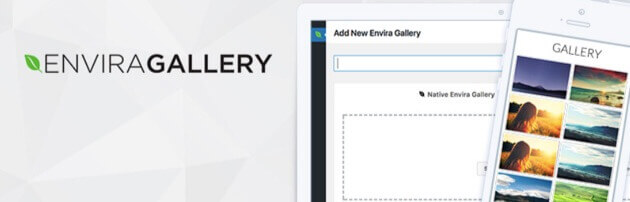
Photography blogs and websites often display and watermark high-quality images. To do this, you can install a photography plugin like Envira Gallery. This tool includes options for watermarking your photos, which may be an important part of your security strategy:

Envira Gallery plugin

With Envira Gallery, you can also set up an online store, create video galleries, and import content from Instagram. Combining this tool with our website builder makes it easy to display your work dynamically online.

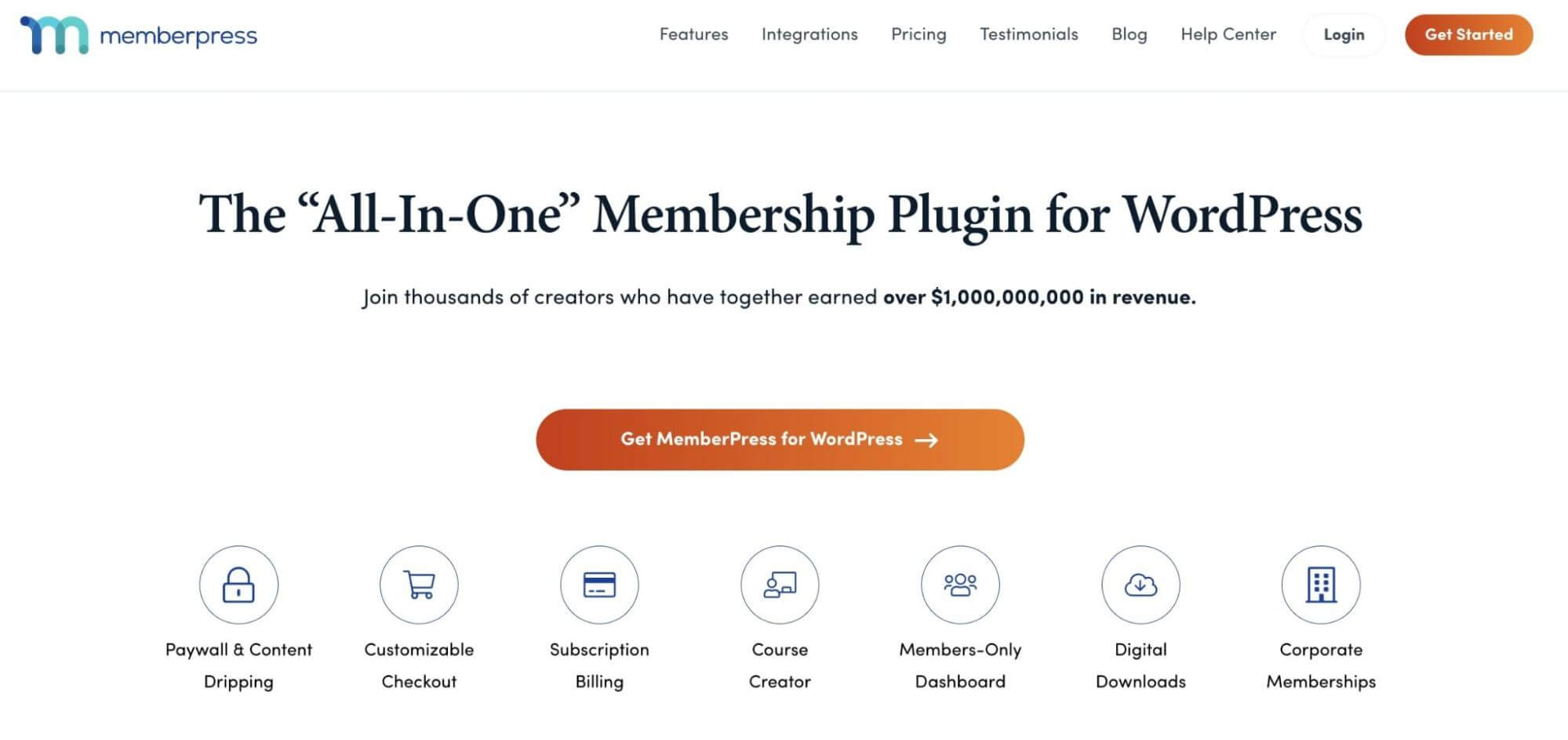
You may also want to create image galleries with password protection or tie your e-commerce options to a file download manager. With MemberPress, you can protect your content with access rules:

MemberPress plugin

This plugin will enable you to turn your photography portfolio into a membership site easily. You can direct visitors to purchase subscriptions before viewing or downloading specific photos. This paywall can be an effective option if you’re looking to monetize your website.

Step 4: Create Compelling Content

When it comes to Search Engine Optimization (SEO), there is more to think about than just keywords. To secure better page rankings, it’s important to encourage other people to talk about you.

Gaining backlinks and social media shares are both effective ways to improve SEO and acquire new clients. To encourage this sharing, you’ll need to create compelling content. This could include tutorials, downloads, infographics, videos, or podcasts.

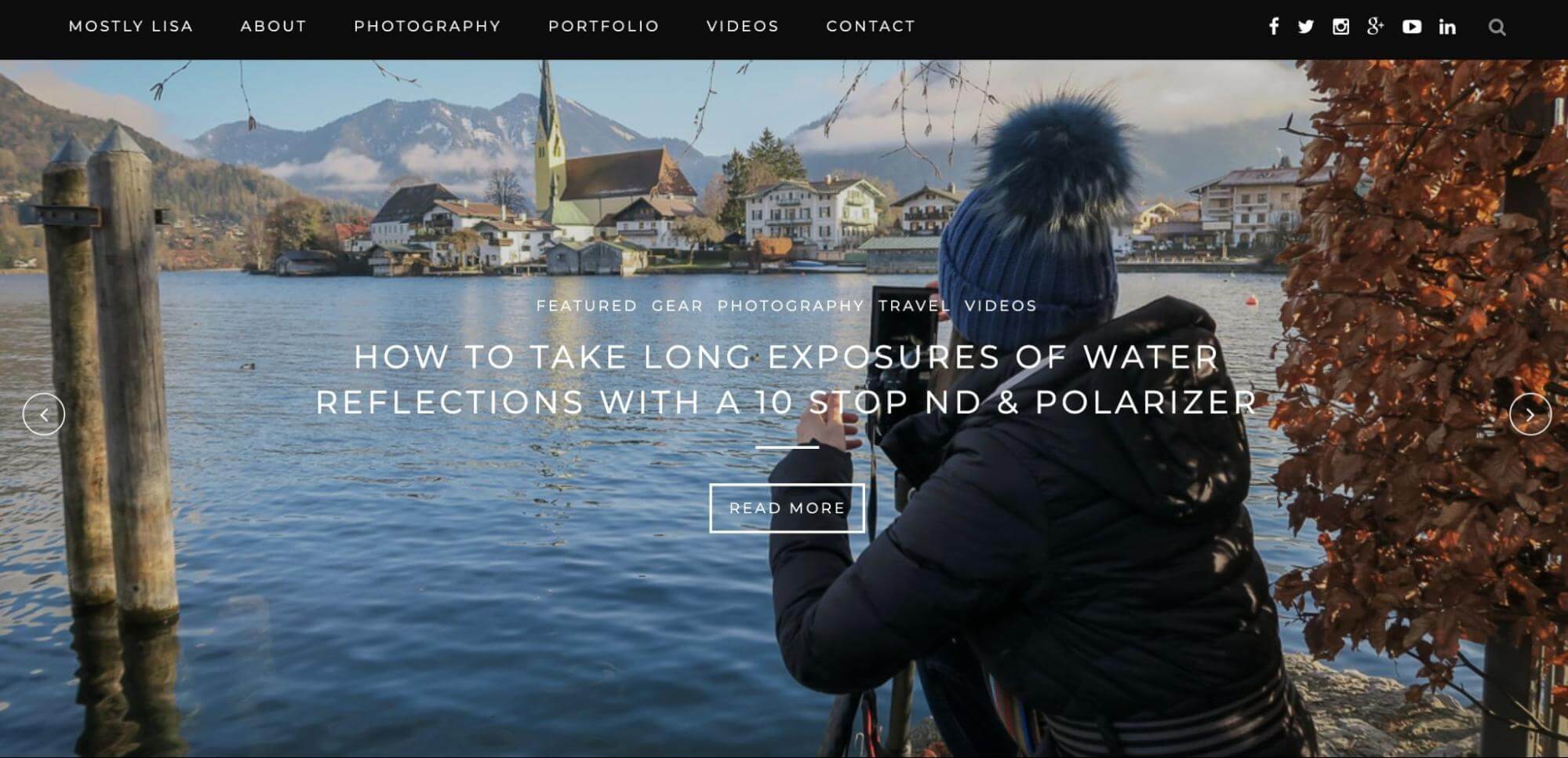
Adding a blog to your page is also a great way to build a following and establish yourself as a trusted name in the industry. A beautiful example of this can be seen on the Mostly Lisa website. Visitors can be inspired by these extensive how-to articles on taking high-quality photos:

Photography portfolio blog

Ultimately, adding a photography blog can make your portfolio feel more credible and engaging for potential clients. Plus, this blog content can easily be shared on social media or referenced by other websites.

How to Promote Your Photography Business

Now that your photography has a home on the web, you might wonder how to get more eyeballs on your work. Self-promotion can sometimes be challenging, but with WordPress and your professional theme, you have plenty to showcase!

There are a few ways to approach promoting your new site, including:

  • Social media: Promoting your work on social media can reap significant benefits. We recommend staying on a posting schedule, so viewers know they can regularly expect new content. This can develop a loyal, engaged audience interested in your work.
  • Testimonials: Research shows that more than 80% of consumers seek recommendations from family and friends before making purchases. This makes customer testimonials a powerful tool on your website.
  • Call to action: If your goal is to gain clients or fill up your email subscriber list, you might want to learn how to write a good Call to Action (CTA). It will clearly guide your site’s visitors toward the action you want them to take.

At the end of the day, there are many ways to build a following online. By creating a well-designed photography website and regularly posting on social media, you’ll be able to gain new clients in no time!

Feature Your Photos Online

If you plan on pursuing photography professionally, you’ll need to get your photos online. Whether your focus is nature, weddings, family portraits, or street photography, you can show off your images with a WordPress photography theme and our Website Builder. These tools can help you easily and quickly create a platform where clients can see and purchase your services.

To review, here’s how you can build a photography portfolio website:

  1. Choose your domain name and web host.
  2. Install a dedicated photography theme.
  3. Select plugins like Envira Gallery and MemberPress to enhance your site.
  4. Create compelling content.

If you’re just starting your photography business, you’re probably looking for a budget-friendly hosting provider. Here at DreamHost, our shared hosting plans are designed to maximize WordPress performance without breaking the bank!

Power Your Website with DreamHost

We make sure your website is fast, secure and always up so your visitors trust you.

shared hosting

The post How to Create an Eye-Catching Photography Portfolio Website (In 4 Steps) appeared first on Website Guides, Tips & Knowledge.


source https://www.dreamhost.com/blog/photography-portfolio-website-design/
Friday, 6 January 2023

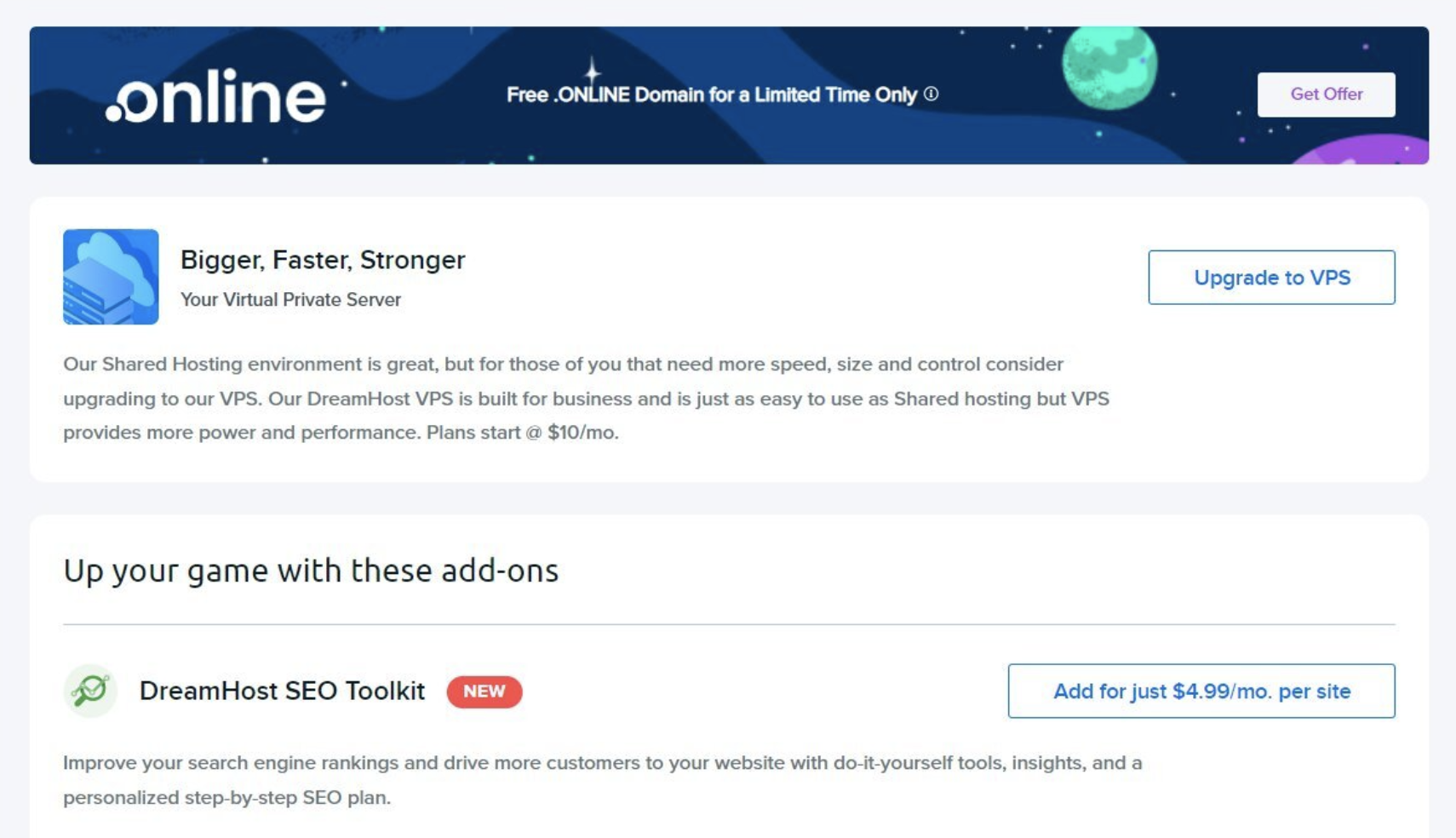
.Online Domains Now Free for a Limited Time

We’re pleased to announce a new promotional offer for .ONLINE, which is quickly becoming one of the most sought-after generic top-level domains available.

Radix, the Registry that owns .ONLINE and nine other domains, has provided DreamHost with 300,000 .ONLINE domains and the authorization to register those complimentary domains for all eligible customers. Eligible customers are limited to active DreamHost customers. No web hosting account is required for a customer to qualify, and standalone domain-only customers are eligible.

About .ONLINE

A .ONLINE domain is flexible, transformative, and modern — ideal for any business or organization that’s either primarily or solely an online-only entity wanting to stand uniquely apart from traditional brick-and-mortar businesses. So, it’s perfect for companies, startups, entrepreneurs, ecommerce sites, personal profiles and portfolios, and blogs, to name a few.

This rising domain is an excellent alternative to other extensions like .COM and .NET that have a broader scope, and a customer who registers a .ONLINE could secure their existing website address on this extension before it’s taken by a competitor.

The word “online” is understood in over 24 languages. That makes .ONLINE a globally well-received, powerful domain name for all types of businesses that want to build a universal brand.

What’s more, since over 2.3 million .ONLINE domains have been registered in over 230 countries, and since it’s the second most known and visited new generic top-level domain globally, any business that registers a .ONLINE domain web address instantly launches — or relaunches — itself to capitalize on that global reach.

Why Register a .ONLINE Domain?

When you’re a global company with clients and customers around the world, registering a .ONLINE domain tells them in clear branding that your virtual doors are open for business to all of them, wherever they are. You’re making a clear statement that you’re not bound and limited to a physical geographic location, so you’re likewise not bound to serving customers near a physical location.

With all these qualities, there’s no reason to pass up staking a claim on a complimentary .ONLINE domain today.

  • SEO-friendly
  • Available
  • Simple yet definitive
  • Memorable
  • Intuitive
  • Global
  • Brandable
  • Relevant

How to Claim Your Free .ONLINE Domain

free .ONLINE domains available now at DreamHost

The promotional offer — which runs from January 1, 2023, to March 31, 2023 — is a credit for the first year of complimentary .ONLINE registration. After the first year, the registration will renew at the then-regular price of $29.95 per year. Active DreamHost customers will find a promo on the DreamHost.com home page and a banner in the Manage Accounts section of their panels, and the offer will also be sent via an email campaign.

Register Your Free .ONLINE Domain Today!

This promotional offer is free for a limited time for eligible DreamHost customers. Grab your free .ONLINE domain today before someone else does!

buy a domain name

The post .Online Domains Now Free for a Limited Time appeared first on Website Guides, Tips & Knowledge.


source https://www.dreamhost.com/blog/free-online-domain-offer/

Thursday, 22 December 2022

Shared vs VPS Hosting: A Comprehensive Guide

Whether you’re redesigning your site or putting it together for the first time, you’ll want to find the hosting plan with the greatest potential to make your page successful. One of the decisions you’ll have to make is choosing between shared and virtual private server (VPS) hosting.

Neither one is inherently better than the other — it all depends on your website’s unique requirements. You may need super-tight security, lightning-fast speed, a low price point, or scalable resources. By carefully considering the pros and cons of each option, however, you can have your cake and eat it too.

In this post, we’ll explain what VPS and shared hosting are and the main differences between them. Then, we’ll show you how to make the right choice for your website. Let’s get started!

What Is Shared Hosting?

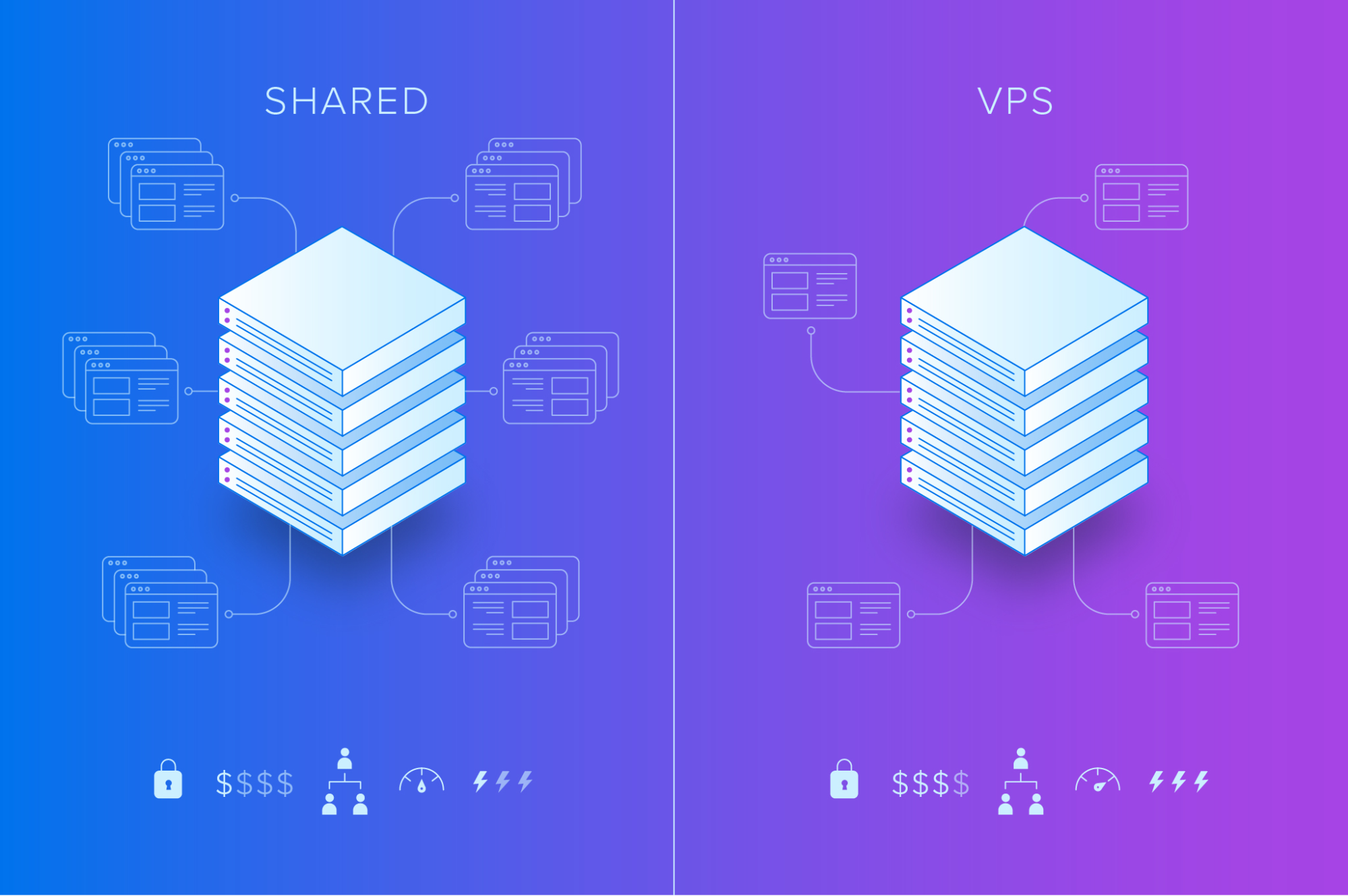
With shared hosting, your site shares the same physical server with many other sites. It’s kind of like an apartment building: you get one unit in a larger structure. While you each have individual living spaces, you may share communal resources like a courtyard, garden, or pool with your neighbors.

There is no reason to be concerned, though. No one using the server can see what others have on it. With a shared hosting plan, you simply share some of the physical resources with other users.

This option tends to be the cheapest because providers can serve many customers from one machine. Shared servers offer customers less bandwidth, management flexibility, and performance, but the hosts take care of all technical configurations, maintenance, and security.

What Is VPS Hosting?

A step up from shared servers is Virtual Private Server (VPS) hosting, which offers more room to grow and fewer restrictions. This version of online real estate is similar to living in a condo. You’ll still share the physical server with a few others, but resources are partitioned off and dedicated to each user.

When you own a condo, you can make changes to your living area such as knocking down a wall. Similarly, virtual private servers allow you to modify the server to your liking. The level of customization lies somewhere between a shared plan and a dedicated server.

As we mentioned earlier, you’ll share server space but have your own resources. Since you don’t have to compete for computing power, there is less worry about other websites using up too much bandwidth or storage and slowing down your site.

If your website deals with secured data or resource-heavy applications, VPS hosting may be the way to go. These plans are typically more costly than shared hosting but still quite reasonable.

7 Key Differences Between VPS and Shared Hosting

Shared vs VPS Hosting

If you’re creating a website for the first time, it can be difficult to choose the right hosting option. To help you decide between VPS and shared hosting, let’s discuss some of the key differences. Both options have their advantages and disadvantages, so let’s take a closer look at exactly what that entails.

1. Performance

As a website owner, it’s important to create a site that is both functional and aesthetically pleasing. However, if your web pages aren’t optimized for fast loading, these factors may not matter.

47% of online visitors expect web pages to load in under two seconds. That means if your website buffers for a longer amount of time, these users will likely be unsatisfied and quickly leave the page.

If you run an e-commerce website, you probably already know how important it is to retain customers. When your visitors experience an unsatisfactory loading performance, 79% of them are unlikely to return to your website.

Ultimately, this is not a lot of time to waste. Choosing the right hosting package is a serious business decision when you consider that mere milliseconds can determine whether people will do business with you.

A VPS hosting plan is almost always going to be faster than a shared hosting plan simply because your users don’t have to queue up with other sites’ visitors to access yours.

To illustrate the difference, imagine a carnival with different food vendors. If everyone had to stand in the same line to get to the vendors, the wait would be longer than if each food stand had its own line.

To put it simply, if your site is relatively small, a shared hosting plan will likely do perfectly fine. However, if your site is larger or is relied on for business and revenue growth, you’ll probably notice the difference.

VPS hosting offers more computing resources and processing power, which can boost the speed of most sites and, thus, increase conversions. Several VPS reviews emphasize performance and reliability when comparing DreamHost with our competitors.

2. Reliability and Stability

When we talk about the availability of a web host, we’re not checking its calendar or relationship status. Rather, we’re examining how often you can expect your website to be working properly. This includes any loading issues because of server or networking problems.

This directly correlates to the uptime of a server, or how often the server is up and running. Uptime is listed as a percentage, and, generally, anything 99.9% and above is considered excellent.

Uptime is important for any website because it determines whether your online presence will be available and open to visitors whenever they appear. This can be especially crucial for professional portfolios, business sites, and e-commerce stores.

Keep in mind that problems can arise with servers in both shared and VPS hosting plans. Much of this depends on the quality of the server hardware and software, as well as the provider’s expertise, support, and management practices.

However, with a VPS hosting plan, fewer customers exist on each server. Each partition can be configured and customized for a particular website or application’s requirements. This extra attention means each VPS is typically more secure and stable.

In a shared hosting environment, there are many websites that could potentially overload the server. A VPS resides in an independent hosting environment and, thus, there is no worry about whether other accounts can affect access to your site.

DreamHost is one of a select few providers that delivers a 100% uptime guarantee, meaning our data centers have a reliable, modern, and redundant infrastructure. In the rare case that your website experiences unexpected downtime, DreamHost will reimburse you the cost of a full day’s worth of hosting expenses.

3. Security

In a shared hosting environment, there is typically more risk for security breaches. Simply because there are more sites on a server, there are more opportunities for attackers to gain entry. Additionally, shared hosting customers are usually the least experienced with web hosting precautions, meaning that server vulnerabilities could be caused by your hosting neighbors.

When one customer sharing the server forgets to update WordPress or has a page that becomes compromised, it can impact other sites on the same machine. Just like performance and reliability, however, the risks can vary wildly depending on how much the hosting company has invested in the security of its servers.

DreamHost, for example, offers Let’s Encrypt SSL/TLS certificates on all domains it hosts. This means that data passed through each site is always safely encrypted.


Websites that deal with a lot of user data or payment information may benefit from choosing VPS hosting. This option offers robust security features that are usually managed by seasoned professionals, so you have less to worry about when it comes to securing sensitive information.

To understand this, consider what it would be like to purchase home security. Basic options come with a few sensors and signs that deter people from breaking in. More sophisticated options, however, include cameras and other monitoring devices that provide additional protection — this is more like a VPS hosting environment.

The world-class security engineering team at DreamHost, lovingly known internally as Nightmare Labs, helps keep websites running smoothly without breaches. By ensuring that your site has the latest patches and security upgrades, you can rest assured that your site is protected.

4. Price

In shared hosting, the cost is split among the many users of the shared server. For this reason, you can generally expect these plans to be more affordable. A VPS plan provides more resources and tends to be more reliable, so it often costs more.

Therefore, from the standpoint of pricing, shared hosting is usually going to be the most economical option overall. At DreamHost, shared hosting plans start at $2.59 per month and increase depending on the features and billing cycle you choose.

VPS hosting plans come with more premium features like increased performance and customizations for online businesses. The VPS hosting plans at DreamHost start at $10 per month, offering a range of varying storage and RAM allocations.

5. Managed Services

Shared vs VPS Hosting

So far, we’ve talked about what constitutes shared servers and virtual private servers, but we’ve yet to talk about who manages them. It’s important to know that most of the time, shared servers are managed, which means that expert employees of the hosting provider will ensure the servers are updated and secured. Shared hosting technicians can also assist with tasks such as migrations, backups, monitoring, updates, and maintenance.

A VPS can be either managed or unmanaged, with the latter referring to a service where the company only assists with problems with its server or network. For example, the customer would be responsible for installing and maintaining software and configurations.

When selecting a VPS host, you can expect more features and support with a managed plan. To decide between a managed and unmanaged VPS, you’ll need to evaluate how much time you want to invest in maintaining the reliability and performance of your site, along with your technical ability to do so.

At DreamHost, we offer managed VPS, so you can be assured that you will get high-quality assistance from the 24/7 technical support team. This can help you easily diagnose and resolve unexpected performance and security issues on your website.

6. Scalability

Scalability is how well your hosting plan will accommodate the growth of your website. This is often the make-or-break feature when deciding between shared or VPS hosting. There are several aspects to scalability, including storage and server capabilities.

A shared hosting plan is well suited for low-to-medium traffic websites, particularly if the visits are spread out over the course of the month. As your site grows, or if its traffic tends to arrive in large bursts, a shared server may not be able to keep up with the increased workload. A VPS hosting plan will provide more guaranteed headroom with resources dedicated to your site, and your site alone.

Resources can often be adjusted to adapt to various traffic trends. For instance, e-commerce stores will likely need more bandwidth to handle the rush of shoppers on Black Friday. Therefore, if you expect to add a lot more content and traffic, a VPS hosting plan is typically a good investment.

Some website owners opt to go with an affordable shared hosting plan initially. This way, they can test an idea and then switch to a VPS plan later. If you anticipate rapid growth, however, you may want to consider starting out with a VPS host right away. When user demand starts to exceed server resources, there is no other option but to upgrade your plan.

7. Customizations

On a shared hosting plan, your server will be pre-configured and optimized for most users. If you’re a beginner, you may not want to modify your server environment at all. In this case, shared hosting may be right for you.

To optimize your website’s performance, you may want to have more control over your installed software. With a virtual private server, you generally have fewer restrictions as far as customizing and installing applications on the server. Unlike shared hosting, you’ll be able to set up new software and customize it to your needs.

Remember, with great power comes great responsibility. With access to the server’s software and settings, you don’t want to inadvertently delete the wrong file or misconfigure a critical component. If you’re new to web development, you may want to start with a shared hosting plan until you learn the ins and outs of these skills.

How to Decide Between VPS and Shared Hosting

With shared hosting, you won’t have to worry about upgrades because most of them are done automatically. Since you won’t need to maintain your own server, no technical expertise is required.

Moreover, shared hosting can be a great choice if you have minimal traffic or are just looking for hosting that’s easy to maintain. This type of plan can be well-suited for:

  • Blogs and personal websites
  • Small to midsize companies
  • E-commerce sites expecting up to 500 visitors per day
  • People who are planning start-ups

Power Your Website with DreamHost

We make sure your website is fast, secure and always up so your visitors trust you.

shared hosting

Like shared hosting, VPS hosting offers a number of its own advantages. Since you’re in full control of your server, you can configure it in any way you please. This can be extremely useful for seasoned WordPress developers.

You’ll also enjoy a tremendous amount of bandwidth and storage that is entirely yours. VPS hosting provides easy backups and scalability, and you can run numerous batch files with your shell access.

Here are some common cases in which a virtual private server is probably appropriate:

  • Businesses that are expanding rapidly beyond shared hosting
  • Companies that expect a substantial increase in traffic in a short few months
  • Businesses that plan to host numerous websites in the near future
  • High-traffic websites in need of extraordinary bandwidth and security

In short, VPS hosting is great when your site is going through rapid growth and expansion as it can keep up with your success. Meanwhile, shared hosting is a terrific entry point into web hosting, allowing you to enjoy affordable hosting as your business develops.

Take Charge with Flexible VPS Hosting

Here’s how DreamHost’s VPS offering stands apart: 24/7 customer support, an intuitive panel, scalable RAM, unlimited bandwidth, unlimited hosting domains, and SSD storage.

VPS hosting provider

When to Upgrade from Shared Hosting to VPS Hosting

If you’re already using a shared hosting plan, you might wonder if it’s time to move on to VPS hosting. Fortunately, there are a few warning signs that can indicate your site is ready for this change.

It’s probably time to get serious about switching when:

  • Your website receives a large number of daily visits
  • You need additional resource allocation like RAM, CPU, disk space, or bandwidth
  • Your website takes longer than 3 seconds to load
  • You receive a lot of unexpected downtime

Whenever you notice any of these factors, it could be time to switch to a VPS. Shared hosting is ideal for smaller websites that need fewer resources, so you should upgrade if your site needs more.

Additionally, you’d be wise to consider scalability. If you plan to host multiple websites for your businesses, you can upgrade to a VPS to accommodate this development. In general, think about what your website currently needs, as well as what it will require for future growth.

Choose the Right Hosting Plan

Ultimately, choosing the wrong type of server can result in a lack of resources. This could be in the form of storage space, scalability, or affordability. However, you can easily avoid this by selecting the best hosting plan for your website.

You’ll want to make sure you evaluate your site’s current needs, as well as your plans for the future. Shared hosting can be a beginner-friendly and cost-effective option for smaller sites. Meanwhile, virtual private servers can provide better security, reliability, and customization options, which is ideal for larger sites with higher traffic.

Want to try VPS or shared hosting? At DreamHost, we offer a variety of both options. That means no matter your budget, required resources, or growth potential, you’ll be able to find a suitable plan for your site!

Get Content Delivered Straight to Your Inbox

Subscribe to our blog and receive great content just like this delivered straight to your inbox.

The post Shared vs VPS Hosting: A Comprehensive Guide appeared first on Website Guides, Tips & Knowledge.


source https://www.dreamhost.com/blog/shared-vs-vps-hosting/

Friday, 16 December 2022

Shared Hosting vs. Dedicated Hosting

If you’re dazed and confused about which web hosting service is best for you, you’ve come to the right place! Given the wide range of options, even the tech-savviest clients may need help.

Let’s start with the basics: shared hosting and dedicated hosting. Neither system is going to be right for everyone, so you’ll need to identify your needs and do your homework. Fortunately, we’re here to explore the different options and help you make an informed choice.

In this guide, we’ll go through a full rundown of shared hosting vs. dedicated hosting. Let’s get started!

Shared Web Hosting

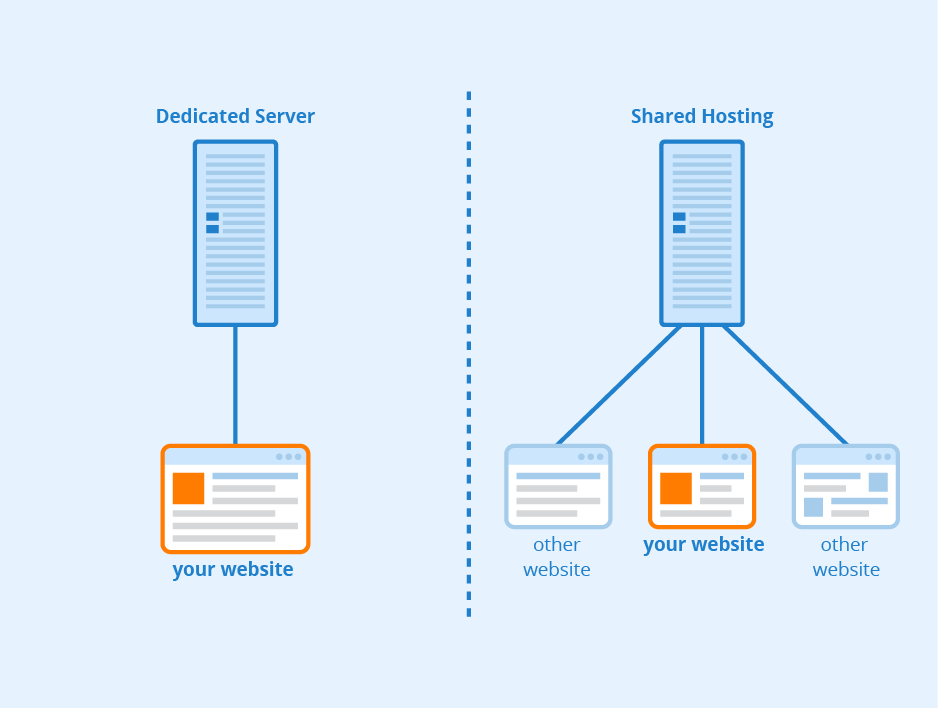
With shared web hosting, one physical server is shared by several users who tap into the same resources. Everyone shares the cost of storage, bandwidth, and other features. Web neighbors can’t access other accounts or websites, so the system is safe and secure:

shared vs dedicated hosting

Credit: Seobility – License: CC BY-SA 4.0

Its cost-effectiveness and ease of use make shared web hosting a popular choice. Your web host will set up your server and install the necessary software.

All you have to do is upload your website or application. Using the simple control panel, you can create and manage your database, email account, and other tools for doing business.

Shared hosting may be an ideal solution if:

  • Your business is small to mid-sized.
  • Your traffic is limited to a few hundred monthly visitors.
  • The content on your website is frequently updated.
  • You have no earthly idea how to configure a server, install and upgrade its software or perform technical maintenance.

At DreamHost, we offer affordable shared hosting plans for WordPress sites. Plus, our plans come with a free domain name!

Why Choose Shared Hosting?

If you’re new to web hosting, a shared platform is great for learning the ropes. It’s perfectly adequate for businesses and websites with light to moderate web traffic which don’t require complex customized server configurations.

You could think of it like a large house shared by several roommates. Expenses for things like food, cleaning supplies, and electricity are divided. If the fridge stops working, the kind landlord lives right next door. The arrangement saves everyone money, and things work out nicely, provided no one drinks directly from the milk carton.

Get Content Delivered Straight to Your Inbox

Subscribe to our blog and receive great content just like this delivered straight to your inbox.

Dedicated Web Hosting

With dedicated hosting, you’re the sole user on the server. Its capacity and resources are all yours. This gives you much more control over its configuration and overall operating environment. There’s also a wider variety of services and software to choose from.

Not every business needs all the bells and whistles that dedicated hosting provides. Still, it might make sense under the following circumstances:

  • Your business is continually growing and adding products or services, so you need the control and flexibility to customize the server, choose your software and adapt the system to changing needs.
  • Your website features a significant amount of video streaming and high-resolution photos.
  • You want a unique IP address that you don’t have to share with other websites.
  • Your business handles extremely sensitive transactions, requiring enhanced security features.

If you’re looking for a dedicated server, we offer fully-managed dedicated hosting. You’ll have root access to your server, along with 24/7 monitoring and support to keep things running smoothly.

Why Choose Dedicated Hosting?

Understandably, having a dedicated server all to yourself costs more than shared hosting. After all, there are more features and resources to choose from. Unless you have excellent technical skills or strong tech support in your company, you’ll probably need a package that includes building and maintaining the equipment.

These additional features come at a price, but they’re worth it for clients who need complete control of the operating environment and a little extra security. Furthermore, dedicated hosting can be a better option if you have a high-traffic site that’s continually growing.

Choose the Best Hosting Plan for Your Website

Shared hosting and dedicated hosting come with their own pros and cons. On the one hand, shared hosting is an affordable option that’s perfectly suitable for small to medium businesses. You also won’t need to worry about configuring your server.

By contrast, a dedicated server offers superior performance and gives you complete control over your server’s configuration. It’s an excellent option for larger businesses, high-traffic sites, and tech-savvy users.

At DreamHost, we offer both shared hosting and dedicated hosting plans. Contact us today to find out which service is right for your website!

Get DreamHost’s Most Powerful Hosting

Our dedicated hosting plans are the ideal solution for high-traffic sites that require fast speeds and consistent uptime.

dedicated hosting provider

The post Shared Hosting vs. Dedicated Hosting appeared first on Website Guides, Tips & Knowledge.


source https://www.dreamhost.com/blog/shared-vs-dedicated-hosting/

Creating and Mastering GA4 Explorations

In the switch from Universal Analytics (UA) to Google Analytics 4 (GA4) — which will go fully into effect July 2023 — a lot of things have...